

“The ultimate defense is not stopping the bomb. It is ensuring the strategic cost of dropping it remains forever prohibitive.”
To understand the most dangerous military contingency in the Middle East today, you don’t need to look at the surface. You need to look deep underground.
For two decades, Iran has engaged in a literal race to the center of the earth. Facilities like Fordow, built deep inside a mountain near Qom, and the subterranean levels of Natanz sit beneath hundreds of feet of solid rock and reinforced concrete. They are designed to survive the apocalypse.
For years, the US military’s answer to this was conventional: the 30,000-pound GBU-57 Massive Ordnance Penetrator (MOP). But the physics of conventional explosives impose strict limits. Even the MOP cannot guarantee the destruction of Iran’s deepest centrifuge halls, as seen in the previous US attacks.
It was previously addressed in the following article:
Israel vs Iran: GBU-57A/B MOP Bunker Buster or Bunker Busted [i]

The GBU-57A/B Massive Ordnance Penetrator (MOP), developed by the United States, is one of the most powerful conventional weapons ever built — a non-nuclear "bunker buster" designed to destroy deeply…
This brings military planners to a dark, heavily classified crossroads: Tactical Nuclear Weapons.
Today, we are diving deep into a highly sensitive, hypothetical scenario. What happens if the US and Israel decide to use low-yield, earth-penetrating nuclear weapons to crack Iran’s underground fortresses? How does Iran detect the stealth bombers coming for them? What role do Russian and Chinese satellites play in tipping off Tehran? And how does Iran retaliate when the ultimate taboo is broken?

Key Takeaways
The Physics Problem: Conventional bunker busters have a hard limit. The US B61-12 tactical nuke is the only (theoretically) guaranteed way to collapse the deepest Iranian facilities.
The Stealth Myth: B-2s and F-35s are (as per the overwhelming marketing mechanism ever present in Western media) “invisible” (to some degree) to fire-control radars, but not to early-warning networks. Iran’s VHF and Over-The-Horizon radars can see them coming.
The Geopolitical Shadow: Iran doesn’t fight alone. Russian and Chinese satellite networks provide strategic warning, ensuring the US and Israel cannot achieve total surprise.
The Retaliation: If the nuclear threshold is crossed, Iran’s response will not be symmetrical. It will be a massive, multi-front regional war.
Part I: The Offensive Arsenal – The US and Israeli Playbook
A strike of this magnitude wouldn’t be a simple bombing run. It would be a highly orchestrated, multi-domain operation requiring the total suppression of enemy air defenses (SEAD) and precision stealth penetration.
The US: The B-2 Spirit and the B61-12
The primary US instrument for this mission is the B-2 Spirit stealth bomber (and soon, the B-21 Raider). The B-2’s Very Low Observable characteristics allow it to slip through heavily contested airspace by minimizing its radar cross-section.
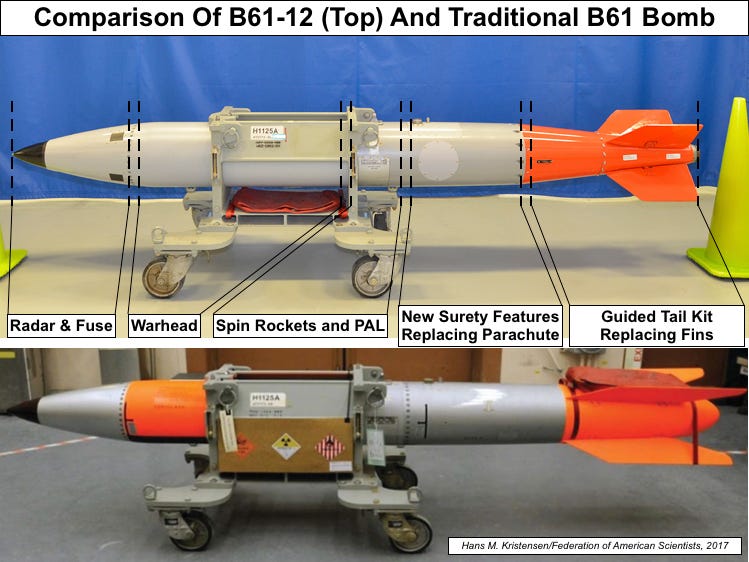
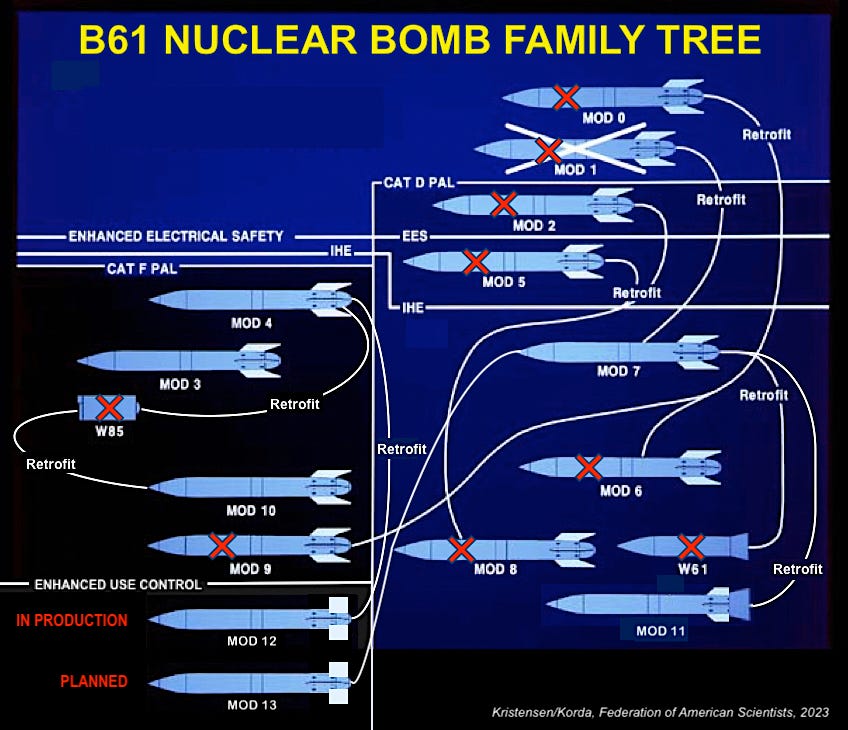
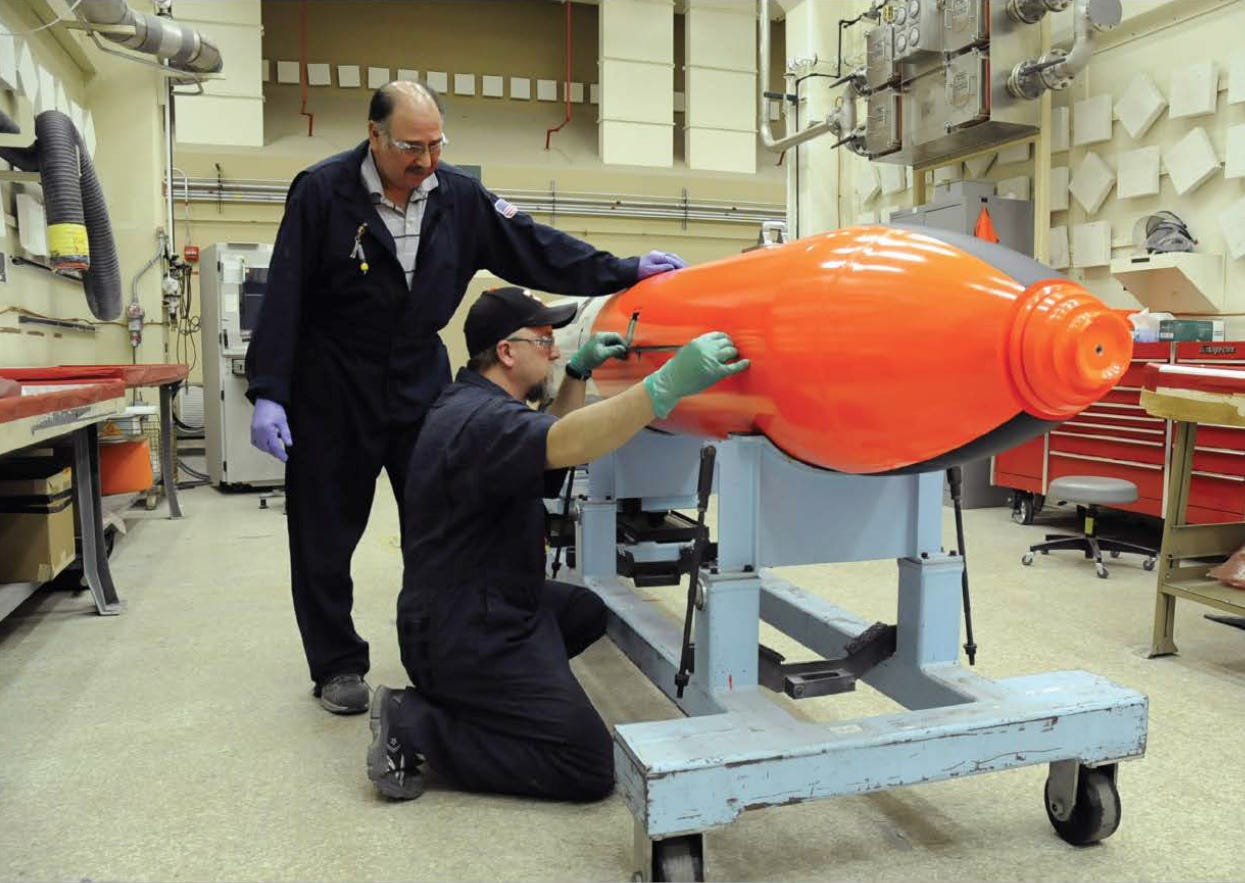
But the bomber is only half the equation. The weapon is the B61-12.
This is not the city-destroying strategic megaton bomb of the Cold War. The B61-12 is a tactical, earth-penetrating gravity bomb with a “dial-a-yield” feature, ranging from a mere 0.3 to 50 kilotons. It features a guided tail kit, allowing it to be dropped from 30,000 feet—keeping the B-2 safely out of range of most Iranian surface-to-air missiles.
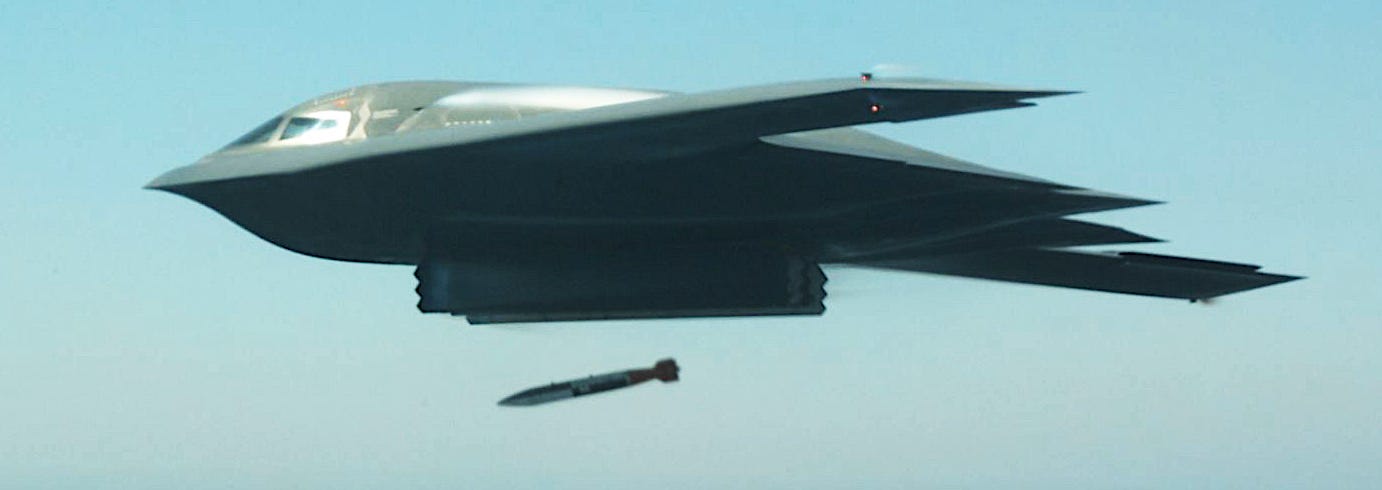
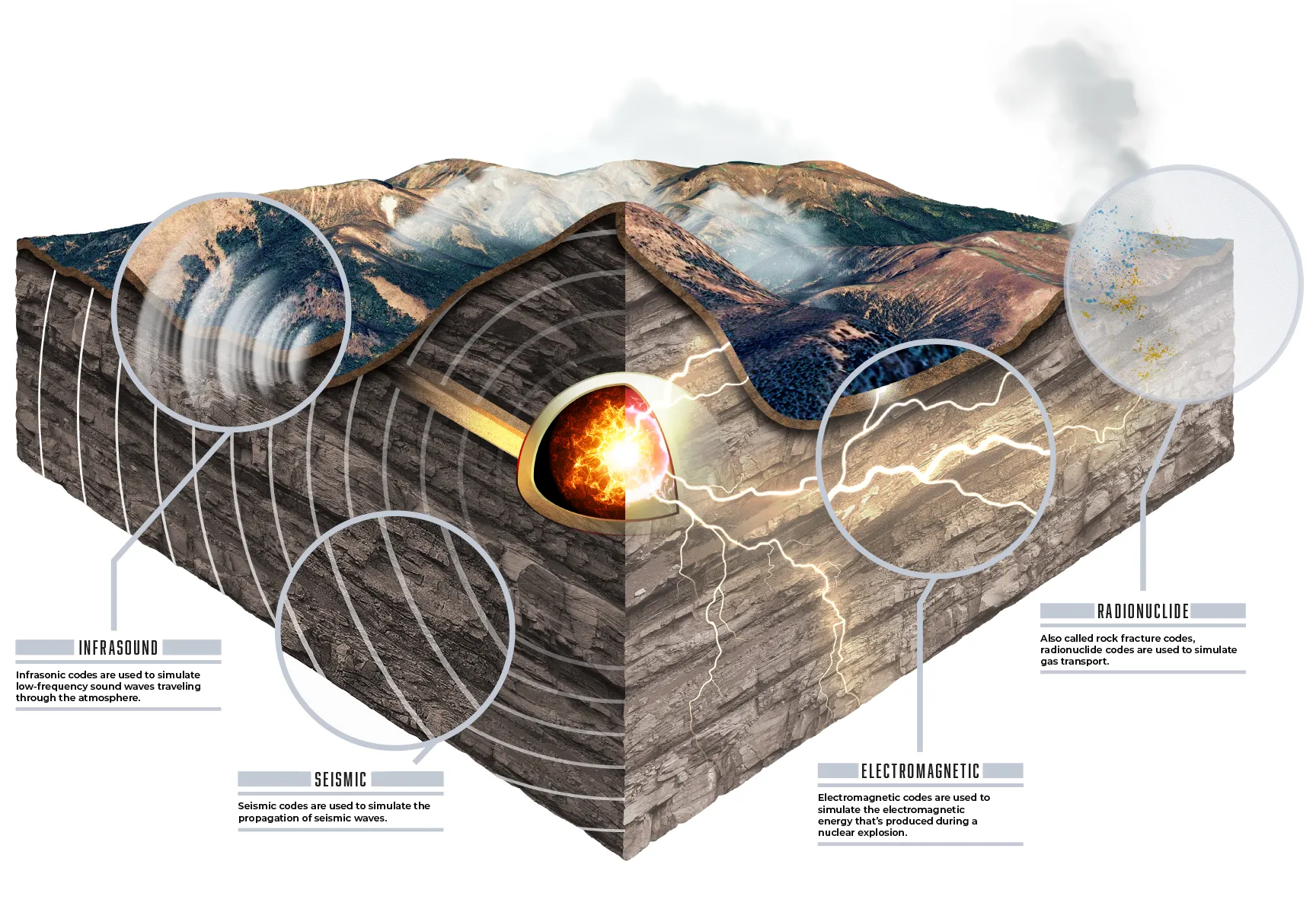
Upon impact, the weapon’s casing penetrates the soil and rock before detonating. The goal is to couple the nuclear energy directly into the surrounding rock, creating a massive subterranean cavity and a seismic shockwave that collapses tunnel networks without necessarily creating a massive, wide-area radioactive fallout cloud on the surface. The Pentagon calls this “escalation control.”
His (or her) highness: the B61-12 Earth-Penetrating Weapon
To understand how the B61-12 destroys deeply buried targets, one must look past the imagery of surface-level mushroom clouds. The B61-12 is, to some degree, an Earth-Penetrating Weapon (EPW). Its design philosophy is not to maximize atmospheric blast, but to maximize energy coupling into the Earth.
By burying the detonation, the weapon transforms the surrounding geology into a highly efficient transmission medium for destructive energy. Here is the step-by-step technical breakdown of the physical mechanisms by which the B61-12 neutralizes subterranean infrastructure.
Terminal Ballistics and Penetration Mechanics
The subject of attacking underground objects was previously addressed in the following article:
Attacking the Underground Objects [i]

In recent days (especially the end of September and the beginning of October 2023) it became obvious that Russia is using more and more heavy bombs (designated as FAB-500 and FAB-1500) equipped with guidance…
Before detonation, the weapon must physically breach the overburden (the layers of soil, rock, and reinforced concrete protecting the target).
Guided Terminal Trajectory: The B61-12 has a tail kit assembly (TKA) with GPS/INS guidance and deployable aerodynamic control fins. This allows the weapon to be released from high altitudes (up to 30,000+ feet) and strike the target with a highly precise, near-vertical angle of impact (ideally 60 to 90 degrees). A steep angle is critical; shallow impacts cause the weapon to ricochet or shatter.
Kinetic Energy and Casing Integrity: The weapon weighs approximately 700 pounds (320 kg). As it falls, it accelerates to supersonic terminal velocities (exceeding 1,000 feet per second, or ~300 m/s). To survive this impact without disintegrating, the bomb casing is forged from maraging steel, an ultra-high-strength, low-carbon steel alloy that maintains immense tensile strength and resists deformation on impact with solid rock.
Penetration Depth: Penetration depth (DD) depends on the weapon’s mass, impact velocity, nose geometry, and the compressive strength and density of the target medium.
In dry, alluvial soil, it may penetrate 10–15 meters.
In solid, competent rock (like the granite surrounding Iran’s Fordow facility), penetration is shallower, typically estimated at 3 to 6 meters, depending on the exact impact velocity and rock fracturing.
Note: Even a few meters of burial can alter the physics of the subsequent detonation.
Detonation and Energy Coupling
The moment the weapon’s fuze detects it has reached the pre-programmed depth (or upon impact, depending on the setting), the nuclear package initiates.
The Coupling Factor: In a surface detonation, roughly 70% of a nuclear weapon’s energy is wasted, radiating harmlessly into the atmosphere as light and airblast. By detonating underground, the B61-12 achieves a coupling efficiency of 90% or higher. The surrounding earth acts as a containment vessel, forcing the explosive energy to interact directly with the ground.
Effective Yield Multiplication: Because of this superior coupling, a deeply buried nuclear detonation produces ground shock equivalent to a much larger surface burst. A 10-kiloton buried detonation can produce the same level of seismic ground shock at a specific distance as a 150- to 250-kiloton surface burst. This allows the B61-12 to use a lower, “tactical” yield (e.g., 10–50 kt) to achieve effects that would otherwise require a strategic-scale weapon.
Subterranean Damage Mechanisms
Once detonated underground, the weapon destroys the facility through three primary, simultaneous physical mechanisms: Ground Shock, Cavity Formation/Collapse, and Infrastructure Severing.
Mechanism A: Seismic Ground Shock (The Primary Crusher)
This is the most lethal mechanism for deeply buried, hardened targets. The detonation instantly vaporizes the rock immediately surrounding the casing, generating a massive, high-pressure plasma fireball. This expansion creates intense stress waves (seismic waves) that radiate outward through the surrounding geology at speeds of several kilometers per second.
Compressive Failure: As the primary compressive wave hits the facility, it exerts immense, instantaneous crushing force on the tunnel walls and ceilings. If the peak stress exceeds the dynamic compressive strength of the reinforced concrete or native rock, the structure is pulverized.
Tensile Failure and Spalling: Rock and concrete are strong in compression but exceptionally weak in tension. When the compressive shockwave reaches a “free surface” (such as the inner wall of an underground tunnel or centrifuge hall), it reflects back as a tensile wave. This reflection pulls the material apart, causing spalling—violent fracturing and ejection of massive chunks of rock and concrete from the ceiling and walls into the facility. This alone can destroy delicate machinery (like centrifuge cascades) and collapse access corridors.
Mechanism B: Cavity Formation and Gravitational Collapse
For targets located very close to the detonation point, the thermal and pressure effects are absolute.
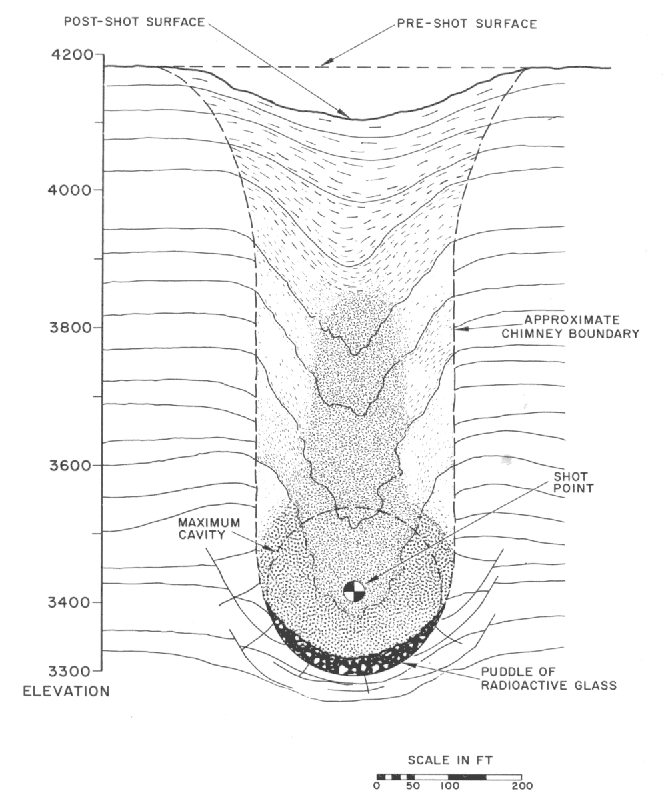
Vaporization: The immediate vicinity of the detonation (the “coupling zone”) is subjected to temperatures of tens of millions of degrees and pressures exceeding millions of pounds per square inch (PSI). The rock is instantly vaporized.
Cavity Expansion: This vaporized rock and fission products expand outward, crushing and melting the surrounding rock to form a spherical, high-pressure gas cavity.
The Chimney Effect: As the fireball cools (within seconds to minutes), the pressure inside the cavity drops. The immense lithostatic pressure (the weight of the mountain/earth above) then causes the cavity roof to fracture and collapse inward. This collapse propagates upward in a “chimney” or “pipe” of rubble, eventually reaching the surface and causing a localized sinkhole or crater. Any facility within this collapse zone is utterly obliterated and buried under thousands of tons of fused, radioactive rubble.
Mechanism C: Infrastructure Severing and Entrapment
Even if the primary target chamber (e.g., a command bunker) is buried deep enough to survive the direct ground shock, the facility can still be neutralized through systemic destruction.
Shaft and Vent Collapse: The shockwaves and localized collapse will shear, crush, or block vertical access shafts, ventilation ducts, and elevator systems.
Asphyxiation and Entrapment: Without ventilation, the underground facility becomes a tomb. Personnel are trapped, and any combustion or residual heat quickly depletes oxygen.
Surface Cratering: Upward venting of gases and subsequent collapse create a surface crater. This ejecta blankets the surrounding area, destroying surface-level infrastructure, radar installations, and secondary entrances, preventing any immediate post-strike recovery or assessment by the defending force.
Yield Scaling and Target Matching
The B61-12’s “dial-a-yield” capability (0.3, 0.5, 1.5, 3, 5, 10, or 50 kilotons) lets mission planners match the weapon to the target’s specific geology and depth to optimize destruction while minimizing collateral surface damage.
Shallow, Soft Targets: For facilities buried under 10–20 meters of soil or soft rock, a lower yield (3–10 kt) is sufficient. The weapon penetrates deeply relative to the overburden, and the lower yield ensures the collapse chimney does not vent excessively radioactive material into the wider atmosphere.
Deep, Hardened Targets: For facilities like Fordow, buried under 80–100+ meters of solid mountain granite, a higher yield (up to 50 kt) is required. The higher yield generates a more powerful seismic wave that can propagate farther through dense rock to reach the target chamber, inducing catastrophic spalling and structural failure even if the weapon’s physical penetration depth is limited to a few meters.
The Physics of Neutralization
The B61-12 does not destroy underground facilities through fire or atmospheric blast. It acts as a subterranean seismic hammer.
By combining precision-guided, high-velocity kinetic penetration with the extreme energy density of a nuclear reaction, it turns the earth itself into the weapon. The resulting shockwaves exceed the structural limits of reinforced concrete and native rock, causing catastrophic spalling, tunnel collapse, and the total mechanical severing of the facility’s life-support and access infrastructure.
Israel: The F-35I Adir
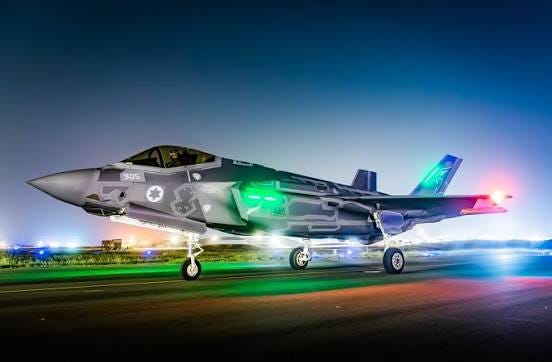
While the US provides the heavy nuclear payload, the Israeli Air Force acts as the tip of the spear. Israeli F-35I Adirs and F-15I Ra’ams would utilize advanced sensor fusion and electronic warfare to map Iranian air defenses, jam radar networks, and designate targets. If the IAF participates in the kinetic strike on the deepest bunkers, they would likely rely on their own specialized, albeit highly classified, bunker-busting payloads, coordinating closely with the B-2s to ensure the weapons hit the exact coordinates required.
The Myth of the “Clean” Tactical Nuke
To fully understand this scenario, we must examine the physical and political reality of using a tactical nuclear weapon. The Pentagon loves the term “tactical” because it implies proportionality and control. But in reality, a “small” nuke is still a nuke.
The Fallout Reality
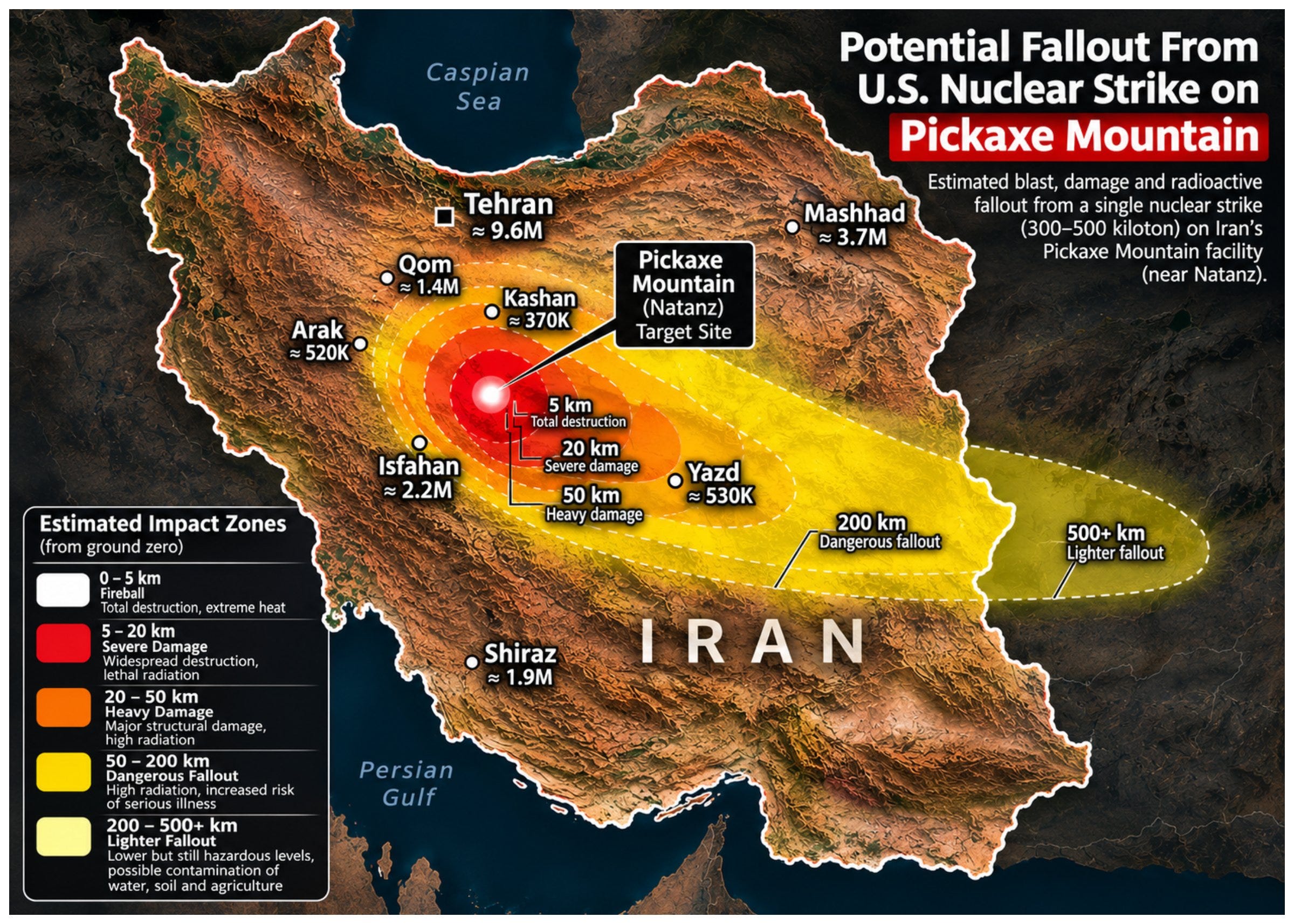
While an earth-penetrating detonation minimizes the surface blast, it inevitably vaporizes tons of rock and soil, mixing it with highly radioactive fission products. This material is thrown back into the air as highly lethal, localized fallout. Depending on wind patterns, this radioactive cloud could drift over neighboring countries, causing a humanitarian and environmental disaster that makes the “surgical” nature of the strike a complete myth.
The Shattered Taboo
The most critical limitation of the tactical nuclear strike is political. The use of any nuclear weapon since 1945 shatters an 80-year-old global taboo.
Even if the US calculates that a 0.3-kiloton blast is “proportional,” the Iranian leadership—and the international community—will not view it through the lens of yield, but through the lens of the weapon’s category. This risks triggering an uncontrollable escalation ladder. Iran would immediately seek to legitimize its own breakout to a nuclear weapon, arguing that only a nuclear deterrent can prevent future US/Israeli aggression. Furthermore, Tehran would leverage the attack to force Russia and China into a more direct, material support role, fundamentally altering the global balance of power.
Part II: The Iranian Shield – Early Warning and Air Defense

Iran has spent decades developing a layered, integrated air defense (IAD) system specifically designed to counter US and Israeli airpower. But how do you shoot at an airplane you can barely see?
The Physics of Stealth vs. Radar Bands
Here is the secret about stealth aircraft like the B-2 and F-35: they are optimized to defeat X-band fire-control radars, which use short wavelengths. However, they are physically larger than the wavelengths used by VHF (Very High Frequency) radars.
This means stealth aircraft are not truly invisible (as many in the Western media believe); they are just a bit harder for fire-control radars to lock on to.
Iran’s Early Warning Network
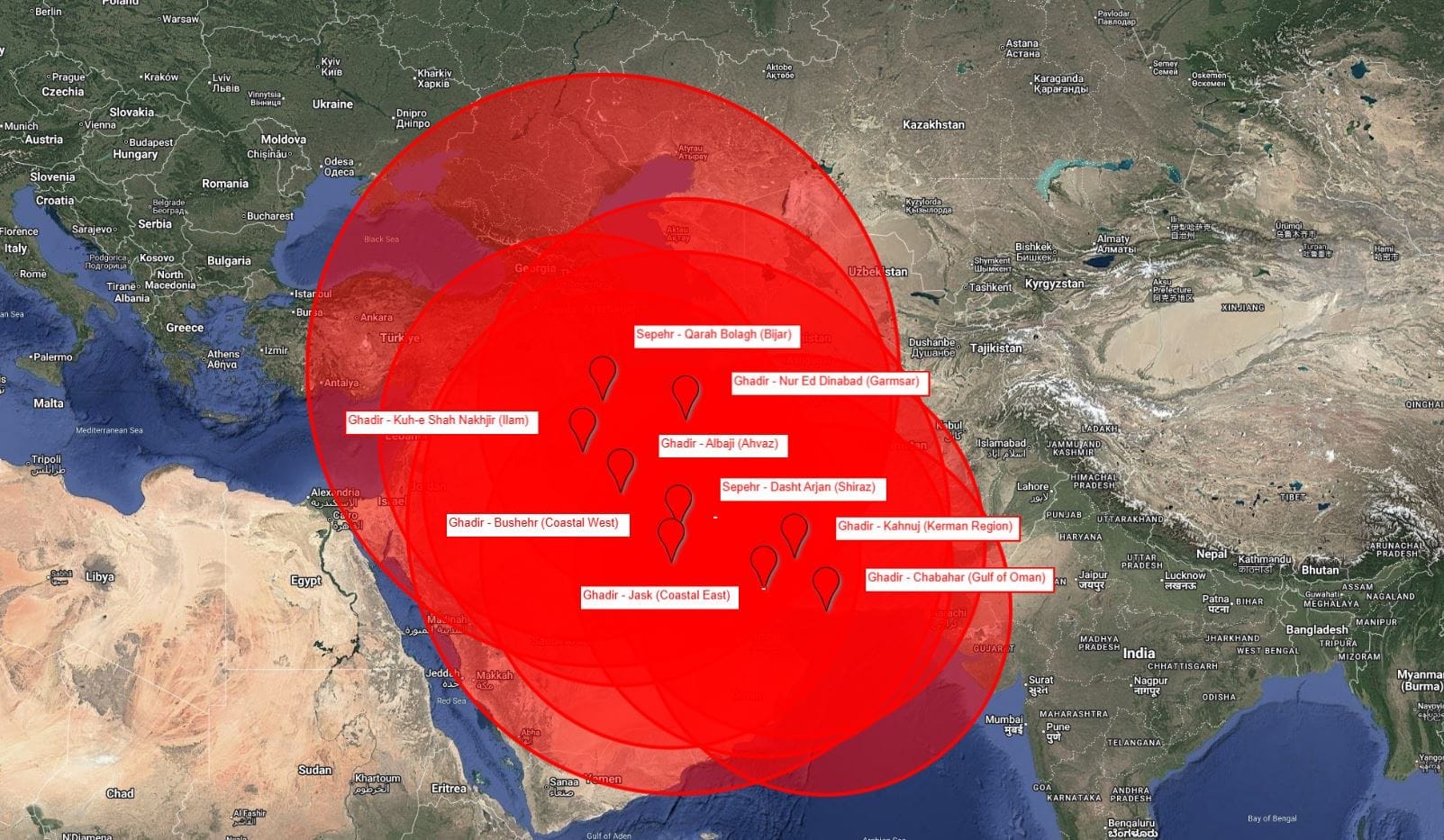
The Sepehr OTH Radar: Operating in the High Frequency (HF) band, this Over-The-Horizon radar uses ionospheric reflection to detect targets at ranges exceeding 3,000 kilometers. It can easily detect the massive radar cross-section of the KC-135 and KC-46 aerial refueling tankers required to get the B-2s to the target. It can’t guide a missile, but it tells Iranian commanders: “A massive air armada is in the region.”
The Ghadir Radar: This large, fixed VHF phased-array radar can likely detect a B-2 or F-35 at long ranges. It lacks the precision to “lock on,” but it can cue other sensors to start looking.
Terminal Fire Control and Passive Detection
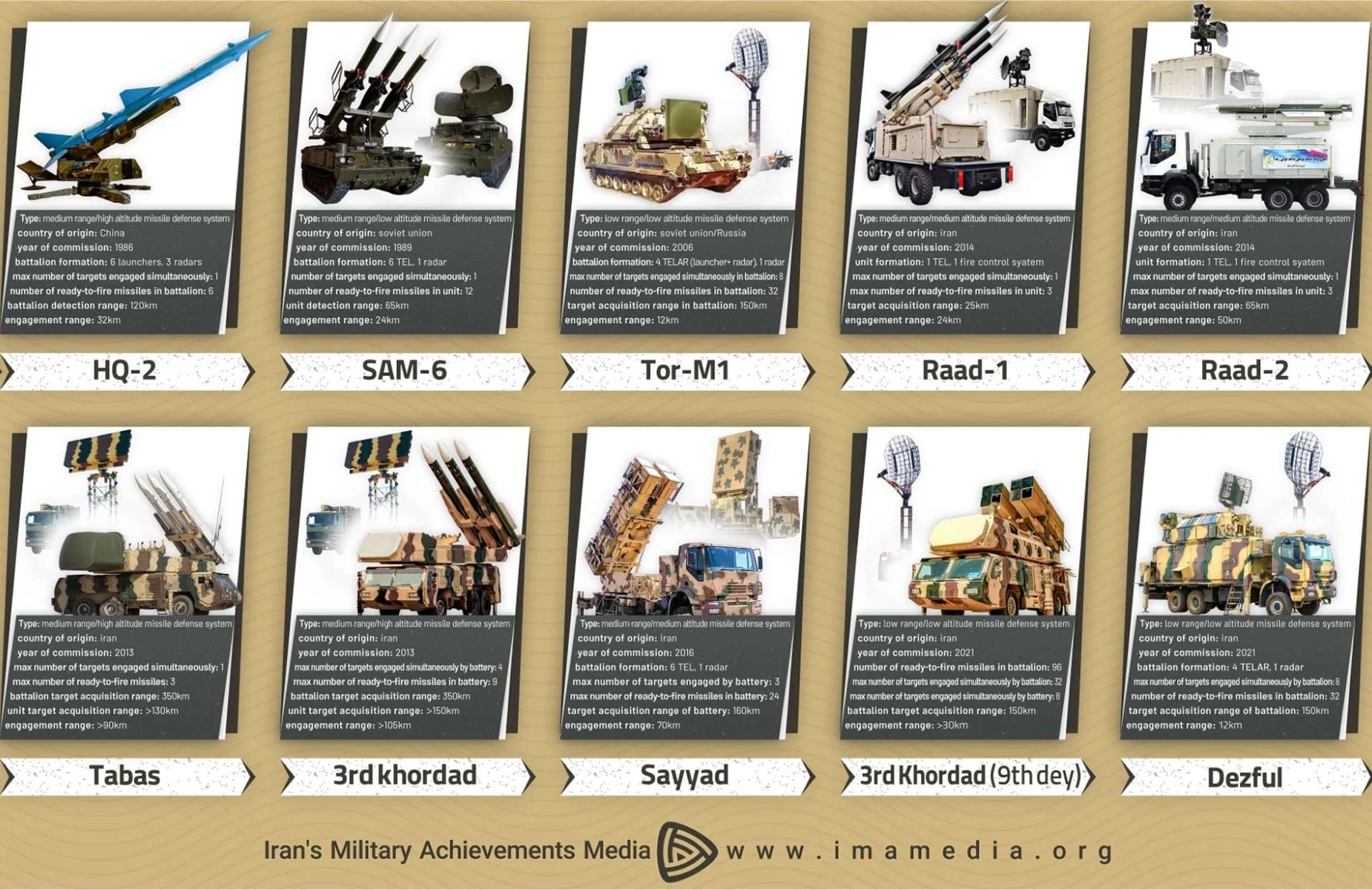
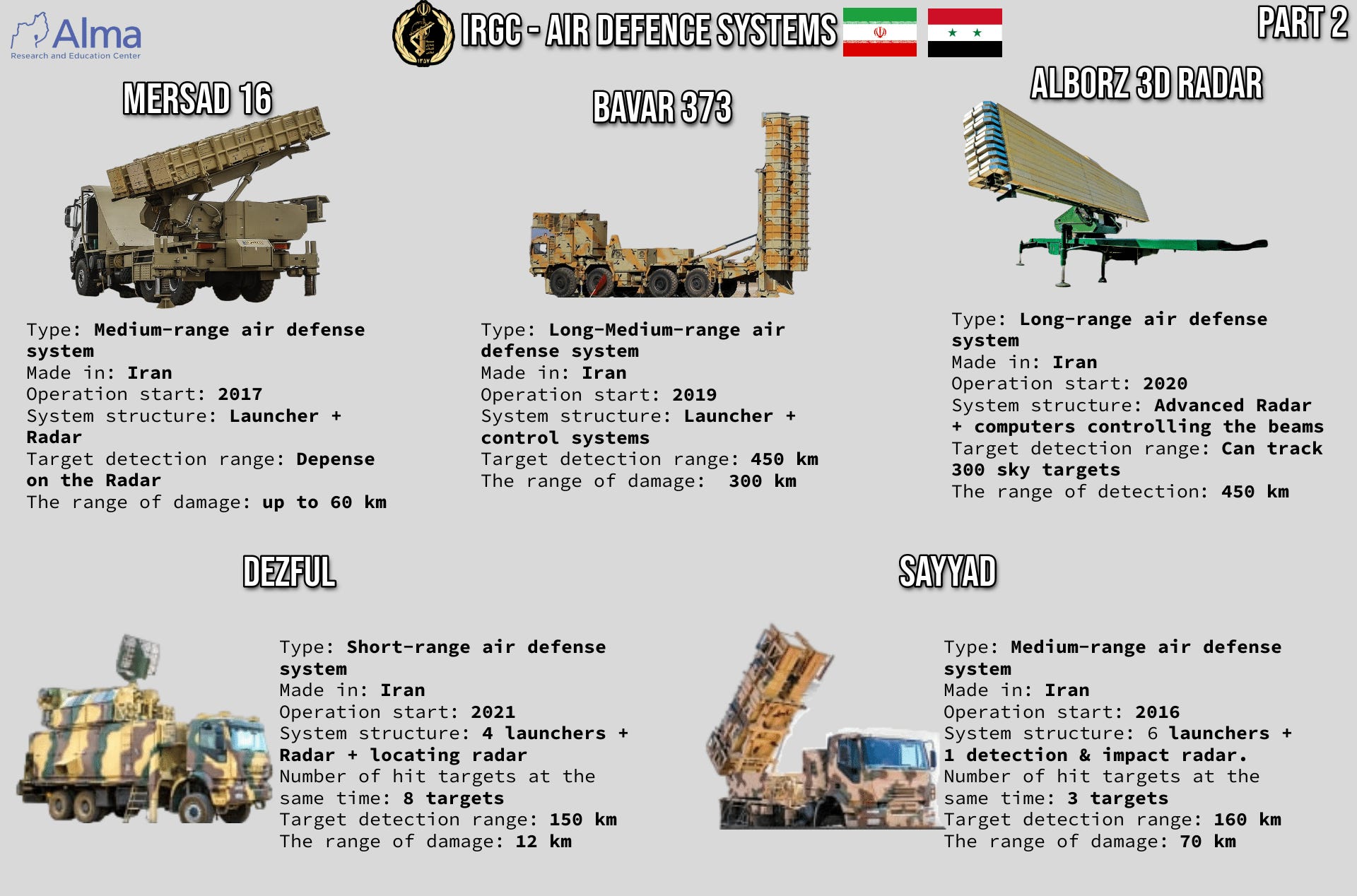
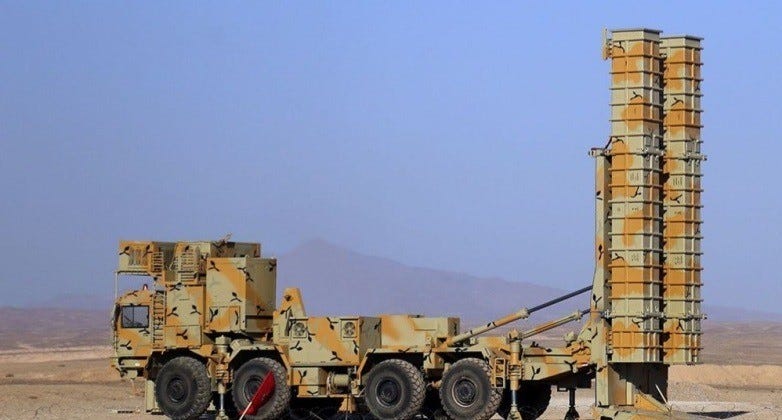
To engage stealth threats, Iran relies on the Russian-supplied S-300PMU2 and its domestically produced Bavar-373 (which uses the multi-frequency Meraj-4 radar).
Recognizing their vulnerability in the electromagnetic spectrum, Iranian air defenses also heavily utilize Infrared Search and Track (IRST) systems. These passive sensors don’t emit radar signals; they just look for the heat signature of aircraft engines. While a B-2’s engines are hidden and cooled, airframe friction and residual heat can still be picked up by highly sensitive, cryogenically cooled IRST sensors at medium ranges.
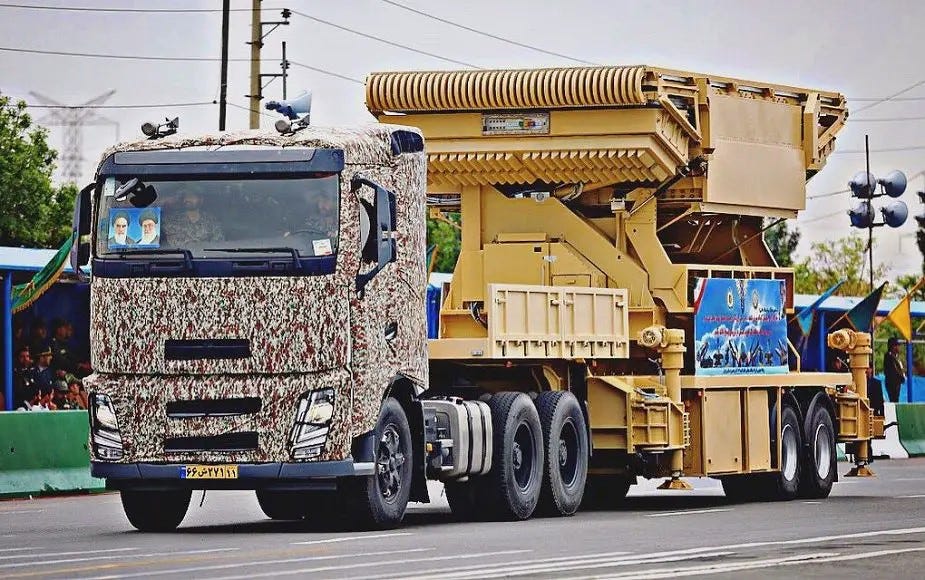
The Geopolitical Shadow – Russian and Chinese Eyes
In modern warfare, the battlefield is transparent. Iran does not rely solely on its own indigenous sensors. It benefits from the vast, multi-billion-dollar intelligence architectures of the Russian Federation and the People’s Republic of China.
Moscow and Beijing may not actively shoot down US aircraft, but their Intelligence, Surveillance, and Reconnaissance (ISR) support provides Iran with crucial strategic warning.
Russian Intelligence
Space-Based Infrared: Russia’s EKS (Kupol) satellite constellation, equipped with Tundra spacecraft, uses infrared sensors to detect heat signatures. They can’t see the B-2, but they can detect the massive thermal bloom of the dozens of aerial refueling tankers assembling in Diego Garcia or the Mediterranean.
Signals Intelligence (SIGINT): Russian listening posts monitor US military communications and GPS navigation signals. A massive spike in US electronic warfare emissions immediately signals to Moscow that a major kinetic operation is imminent.
Chinese Intelligence
The Yaogan Constellation: This series of Chinese military satellites encompasses optical imaging, Synthetic Aperture Radar (SAR), and electronic intelligence. The Yaogan network can track US Carrier Strike Groups, monitor Israeli F-35 flight paths, and detect the electromagnetic signature of stealth aircraft.
Data Fusion: China and Russia operate advanced data fusion centers. They correlate the movement of US tankers, the repositioning of naval assets, and the activation of regional cyber nodes to build a highly accurate predictive model of a strike.
How the Intel is Relayed
It is highly unlikely that Russia or China would provide Iran with a real-time, raw data feed of US B-2 flight paths. That would risk exposing their own satellite capabilities and directly implicate them in a nuclear exchange.
Instead, the support is strategic warning. Moscow and Beijing would likely inform Tehran of the probability and timing of a strike days in advance. This allows Iran to transition its air defenses to maximum alert, disperse its leadership, and activate passive sensor networks, effectively narrowing the window of surprise for the US and Israel.
Part IV: The Iranian Counter-Strategy – Survive and Retaliate
If Iran receives strategic warning from its allies, its countermeasures shift from active interception (which is nearly impossible against a B-2 dropping a nuke from 30,000 feet) to survival, mitigation, and devastating retaliation.
Pre-Strike: Dispersal, Decoys, and “Cheese” Tunnels
The most effective counter to a nuclear bunker-buster is to ensure the target isn’t where the bomb falls.
Asset Dispersal: Upon receiving warning, Iran moves enriched uranium, scientific personnel, and command nodes out of primary facilities like Fordow, relocating them to smaller, unknown, and even deeper subterranean sites.
Decoy Infrastructure: Iran has a long history of building fake tunnel entrances and simulating the thermal signatures of active enrichment facilities, forcing the US to waste precious stealth sorties on empty holes in the ground.
Shock Mitigation: For assets that can’t be moved, Iran employs extreme passive hardening. This includes adding layers of shock-absorbing materials (specialized foams or sand layers) and designing tunnel entrances with sharp, dog-leg turns to prevent blast overpressure from channeling directly into the main halls. They essentially build the tunnels like a slice of Swiss cheese to dissipate the shockwave.
The Retaliation Doctrine
If the US and Israel cross the nuclear threshold, the Iranian leadership will view it as an existential act of war. The counter-strike would be immediate and unconstrained.
Ballistic Missile Swarms: Weapons like the Sejjil, Emad, and the hypersonic-capable Fattah would be launched in massive, coordinated salvos against Israeli population centers and the Dimona nuclear facility. The goal is to overwhelm Israel’s multi-layered air defense network (Arrow, David’s Sling, Iron Dome) through sheer volume.
Targeting US Regional Assets: Every US military base in the region—from Al Udeid in Qatar to Al Dhafra in the UAE—would be targeted by Iranian ballistic missiles and suicide drones.
The “Axis of Resistance”: Iran would fully activate its proxy network. Hezbollah in Lebanon possesses an estimated 150,000 rockets and missiles. A coordinated strike from Lebanon, combined with Houthi anti-ship ballistic missiles closing the Red Sea, and Iraqi militia drones targeting US forces, would create a multi-front regional war that would stretch US defenses to the breaking point.
The Attack
Let’s now dive into the attack:
To strike deep into Iranian territory—whether with conventional bunker busters or tactical nuclear weapons—the US and Israel must first achieve absolute air supremacy. This requires a SEAD/DEAD campaign of unprecedented complexity.
Iran’s Integrated Air Defense System is not a single weapon; it is a networked ecosystem of early warning radars, fire-control systems, surface-to-air missile batteries, and hardened command-and-control bunkers.
Neutralizing this network is not a single event. It is a meticulously choreographed, five-phase campaign designed to systematically blind, deceive, and destroy the Iranian air defense architecture. Here is the step-by-step breakdown of how it would unfold.
Phase 1: The Invisible War (Cyber & Electronic Pre-Conditioning)
Timeline: Days to Hours Before H-Hour
Before a single missile is launched, the US and Israel would attack the Iranian IADS in the cyber and electromagnetic domains to degrade its cohesion and readiness.
Cyber Intrusion of C2 Networks: US Cyber Command and Israeli Unit 8200 would execute pre-planted malware or zero-day exploits targeting Iran’s air defense communication networks (such as the domestic “Raad” or “Fajr” air defense systems). The goal is not necessarily to shut the system down entirely—which would immediately alert the Iranians—but to introduce latency, corrupt radar-tracking data, or sever data links between early-warning radars and SAM launchers.
GPS Spoofing and Jamming: US Navy EA-18G Growlers, operating from the Persian Gulf or the Mediterranean, would begin broadcasting high-power, targeted electromagnetic interference. This “noise” would degrade the GPS signals that Iranian mobile SAM systems (like the Khordad-15 or Bavar-373) rely on for precise geolocation and timing.
Communication Interdiction: Directed-energy weapons and high-power microwave (HPM) systems would fry the unshielded communication relays and microwave towers that connect remote radar sites to central command in Tehran.
Phase 2: The Phantom Swarm (Deception & Saturation)
Timeline: 30 to 60 Minutes Before H-Hour
To destroy a radar, you first have to force it to turn on. Iranian operators are trained in Emission Control (EMCON)—keeping their radars off to avoid detection. The US and Israel would use deception to force their hand.
The MALD-J Swarm: US and Israeli fighter jets would launch hundreds of ADM-160 Miniature Air-Launched Decoys (MALD) and their jamming variant, the MALD-J. These expendable, jet-powered drones are programmed to mimic the exact radar cross-section (RCS) and flight profiles of large, high-value targets like B-52 bombers, F-35s, or cruise missiles.
Forcing the “Shoot” Decision: As this phantom armada floods Iranian radar screens, it creates a massive, overwhelming threat picture. Iranian air defense commanders, believing a massive invasion is underway, will be forced to break EMCON. They will power up their fire-control radars (like the S-300’s Grave Stone or Bavar-373’s Meraj-4) to track the targets and prepare to fire.
The Trap: The moment an Iranian radar emits a signal, it lights up like a flare in the night sky to US and Israeli electronic intelligence (ELINT) satellites and airborne sensors. The radar has just signed its own death warrant.
Phase 3: The Wild Weasel Strike (Anti-Radiation & Stand-off Kinetics)
Timeline: H-Hour (The Kinetic Onslaught)
With Iranian radars actively emitting to track the decoys, the “Wild Weasel” mission begins. This phase relies on stand-off weapons that can destroy air defense nodes from well outside the lethal range of Iranian SAMs.
The AGM-88G AARGM-ER: This is the crown jewel of modern SEAD. The Advanced Anti-Radiation Guided Missile – Extended Range is fired from US F/A-18s or F-35s from over 100 miles away. It does not just home in on radar emissions. If the Iranian operator panics and turns off the radar, the AARGM-ER switches to its onboard millimeter-wave active radar seeker, which maps the terrain and identifies the physical radar vehicle, destroying it even in “silent” mode.
Stand-Off Cruise Missile Strikes: Simultaneously, US Navy destroyers and submarines in the Persian Gulf, along with US bombers, would launch volleys of AGM-158 JASSM-ER (Joint Air-to-Surface Standoff Missile - Extended Range) and Tomahawk Block V cruise missiles. These stealthy, terrain-hugging missiles are programmed with pre-loaded GPS coordinates of known, hardened Iranian SAM sites, ammunition depots, and C2 bunkers.
Targeting the Reloaders: A critical, often overlooked target is the SAM reload infrastructure. Destroying the launcher is only half the battle; JASSM-ER strikes would specifically target the warehouses and transport vehicles carrying spare interceptors, ensuring that even if a site survives the first wave, it cannot be reloaded.
Phase 4: The Stealth Mop-Up (Direct Attack on Hardened Nodes)
Timeline: H+1 to H+3 Hours
After the initial stand-off barrage, some Iranian air defense nodes will inevitably survive. Some operators will remain disciplined and keep their radars off. To eliminate these “holdouts,” US and Israeli stealth assets will penetrate the degraded airspace.
The F-35I “Quarterback” Role: The Israeli F-35I Adir will operate deep inside Iranian airspace. Because its stealth profile resists detection, it can safely fly close to surviving SAM sites. It will use its AN/APG-81 AESA radar in passive receive-only mode and its Electro-Optical Targeting System (EOTS) to detect the faint heat signatures of idling SAM generator trucks or the physical outlines of radar dishes, without ever emitting a detectable radar ping of its own.
Precision “Sniping”: Once the F-35I identifies a hidden or silent SAM site, it does not need to drop a bomb itself. It can silently beam the precise targeting data via secure datalink to a US B-2 Spirit or a lurking F-15E Strike Eagle flying safely outside the danger zone. Those aircraft will then drop a GPS/Inertial-guided GBU-39 Small Diameter Bomb (SDB) directly onto the target.
Loitering Munitions: Israeli forces would deploy IAI Harop or similar loitering munitions (kamikaze drones). These would circle high above the contested area for hours, passively listening for any sudden radar emissions or radio communications from surviving Iranian units. If a site “pops up,” the Harop autonomously dives and detonates on the radar dish.
Phase 5: Battle Damage Assessment (BDA) and Continuous Suppression
Timeline: Ongoing
Neutralizing an IADS is not a one-and-done event; it is a continuous process of hunting survivors to keep the airspace safe for the primary strike package (e.g., the bombers carrying the deep-penetration payloads).
Persistent ISR Overwatch: US RQ-4 Global Hawk drones and Israeli Heron TP MALE (Medium-Altitude Long-Endurance) UAVs would establish continuous orbits over the strike corridors. Their advanced synthetic aperture radar (SAR) and signals intelligence payloads would constantly scan for any new radar emissions or the movement of mobile SAM launchers (like the Tor-M1 or domestically produced Talash systems) attempting to relocate.
Rapid Reaction Kill Chains: If a surviving Iranian SAM operator attempts to set up in a new, hidden location and turns on their radar, the ISR drone immediately relays the coordinates to a dedicated “CAP” (Combat Air Patrol) of F-35s or F-15s. The time from “radar emission detected” to “missile impact” would be reduced to under two minutes, creating a lethal environment where turning on a radar equals immediate destruction.
Physical Blockade of Reinforcements: US and Israeli special operations forces, potentially working with local assets, or precision airstrikes, would target the major highways and bridges leading to key air defense sectors, preventing the Islamic Revolutionary Guard Corps from moving replacement air defense systems into the breach.
The Porcupine Strategy: How Iran’s Air Defense Crews React, Adapt, and Survive the SEAD Onslaught
Facing the most advanced air forces in the world, Iran’s doctrine isn’t about winning a symmetrical air war. It’s about deception, discipline, and survival. Here is the step-by-step breakdown of how Iranian air defense crews would react to and absorb a US-Israeli strike.
“To defeat a high-tech predator, you do not stand and fight. You become a ghost, a decoy, and a trap.”
When the US and Israeli SEAD/DEAD campaign begins, Iranian air defense commanders will not be caught entirely by surprise. Thanks to strategic warning from Russian and Chinese intelligence, coupled with their own Over-The-Horizon radar detections of massing aerial tankers, the IRGC Aerospace Force will already be on maximum alert.
However, Iranian doctrine acknowledges a harsh reality: they cannot achieve air superiority against the US and Israel. Therefore, their defensive strategy is not built around “winning” the air battle, but around survival, deception, and attrition. Their goal is to preserve their most critical assets, frustrate the attackers, and live to fight another day.
Here is the detailed, step-by-step breakdown of how Iranian air defense crews would react, counter, and disperse to absorb the impact of the attack.
The Discipline of Silence (Reaction to Deception)
Timeline: As the “Phantom Swarm” of MALD-J decoys arrives
The first and most critical test for Iranian crews is psychological and procedural. The US and Israel will flood the airspace with electronic decoys, hoping to panic Iranian operators into turning on their fire-control radars.
Strict Emission Control (EMCON): Iranian crews, heavily trained by Russian and Chinese advisors, are drilled in strict EMCON. They are explicitly ordered not to take the bait. They will recognize that a sudden, massive influx of radar contacts is likely a decoy swarm.
The “Dark” Posture: Major SAM sites (like the S-300PMU2 and Bavar-373) will power down their active X-band fire-control radars. They will rely entirely on passive detection methods.
Passive Tracking: Instead of emitting radar waves, crews will switch to Infrared Search and Track (IRST) systems (like the domestic Mesbah-1) and electro-optical sensors. These systems scan the sky for the heat signatures of aircraft engines or the friction heat on the airframes of stealth bombers, allowing them to build a track file without giving away their own position.
Analog Fallback: Anticipating the cyber-attacks and GPS jamming described in the previous phase, crews will sever their digital links to the central “Raad” air defense network. They will revert to pre-arranged, localized, analog communication methods (encrypted VHF radios, landlines, or even physical couriers) to prevent malware from spreading through their systems.
The Asymmetric Counter-Measures (Fighting Back)
Timeline: As stand-off cruise missiles and anti-radiation missiles (AARGM-ER) are launched
Once the kinetic strike begins, Iranian crews will employ a mix of electronic warfare and ambush tactics to degrade the incoming munitions and punish overconfident attackers.
Localized Electronic Warfare (EW): While Iran cannot jam an F-35’s stealth shaping, they possess domestic EW systems (like the “Aras” or “Ghader” jammers). Crews will activate these to create localized “bubbles” of electromagnetic noise. The goal is not to stop a stealth jet, but to break the GPS/Inertial guidance lock of incoming subsonic cruise missiles (like the JASSM or Tomahawk), causing them to miss their targets or crash into empty terrain.
The “Pop-Up” Ambush (Shoot-and-Scoot): This is the most dangerous tactic in Iran’s arsenal. Highly mobile, short- to medium-range air defense systems (like the Russian Tor-M1, Pantsir-S1, or the domestic Talash) will remain completely hidden and silent. They will wait until a low-flying cruise missile or a loitering munition is visually or passively detected. The crew will then power up their radar for a mere 5 to 10 seconds, fire a salvo of interceptors, power down immediately, and begin moving the vehicle before the US anti-radiation missile can calculate a firing solution.
Urban Shielding: Iranian commanders are acutely aware of Western Rules of Engagement (ROE) and the political cost of collateral damage. They will deliberately position mobile SAM launchers and radar units in close proximity to densely populated civilian areas, hospitals, or religious sites. This creates a “human shield” dilemma, forcing US/Israeli pilots to abort strikes or risk a massive geopolitical backlash.
Phase 3: The Great Dispersal (Absorbing the Blow)
Timeline: H-Hour and beyond
To survive the precision strikes, the Iranian air defense network will physically transform from a centralized, fixed grid into a decentralized, highly mobile “shell game.”
Activation of Decoy Networks: Iran has spent years building elaborate decoy infrastructure. As the attack begins, they will activate inflatable radar dishes, wooden mock-ups of SAM launchers, and, crucially, thermal emitters. These devices mimic the heat signature of a running generator or missile launcher, tricking the Synthetic Aperture Radar (SAR) and infrared sensors of US drones and stealth jets into wasting million-dollar munitions on empty fields.
Pre-Surveyed Secondary Sites: Mobile air defense units will not flee randomly. They will execute pre-planned relocation routes to secondary, camouflaged positions. These include hidden valleys, dense forested areas, or even reinforced underground highway tunnels designed specifically for military vehicle concealment.
Cannibalization and Scattering: To protect the core nuclear facilities, the IRGC will deliberately strip air defense assets from less critical, peripheral military bases. These systems will be rushed to reinforce the immediate perimeter of Fordow, Natanz, and key leadership bunkers, creating a dense, overlapping “flak trap” in the most vital zones, while willingly sacrificing the outer layers of their defense.
Phase 4: Decentralized Command and “Mission Command”
Timeline: Post-Strike (H+3 Hours and beyond)
The US/Israeli objective is to decapitate the Iranian air defense by destroying the central C2 nodes in Tehran. Iran’s counter to this is radical decentralization.
Pre-Delegated Authority: Iranian air defense doctrine incorporates a form of “Mission Command.” If cyberattacks or physical destruction sever communication with the central Air Defense Headquarters, local site commanders are pre-authorized to make independent tactical decisions. They do not need Tehran’s permission to engage a target or relocate.
The “Hive” Mentality: Surviving radar and SAM sites will form ad-hoc, localized networks. A surviving Ghadir VHF early warning radar in one province might use a hardened, line-of-sight microwave link to share target data directly with a Bavar-373 battery in the next province, bypassing the destroyed central hub entirely.
Civilian Integration for Logistics: To keep mobile systems fueled and armed after supply lines are bombed, the IRGC relies on pre-positioned caches hidden in civilian garages, mosques, and private homes. This allows air defense crews to re-arm and refuel without using vulnerable, centralized military depots that would be primary targets for US cruise missiles.
The Ultimate Iranian Objective: Strategic Endurance
From the Iranian perspective, survival is victory.
If the US and Israel expend hundreds of millions of dollars in stealth sorties, decoys, and precision munitions, but Iranian crews manage to keep even 20% of their air defense network functional through deception, dispersion, and silence, Tehran will claim a massive strategic victory.
By absorbing the blow, preserving their core capabilities, and forcing the attackers to navigate a lethal, unpredictable, and politically complicated battlespace, the Iranian air defense crews aim to prove that the cost of neutralizing Iran is simply too high to sustain. They do not need to shoot down the B-2; they only need to make the B-2’s mission so difficult, so costly, and so politically fraught that it cannot be repeated.
Conclusion: The Fragility of Deterrence
The scenario of a US and Israeli tactical nuclear strike on Iran’s underground bunkers represents one of the most dangerous military contingencies in modern geopolitics.
The offensive capabilities of the US B-2 Spirit and the B61-12 provide a theoretical means to destroy the deepest subterranean facilities, bypassing the limitations of conventional physics. However, this offensive power is not exercised in a vacuum.
Iran’s layered early warning network, combined with the geopolitical shadow of Russian and Chinese intelligence, ensures that the US and Israeli strike packages cannot achieve total strategic surprise. The transparent nature of the modern battlefield gives Tehran the warning necessary to disperse its most critical assets and prepare its formidable retaliatory forces.
Ultimately, the Iranian counter-strategy relies on a grim calculus: they may not be able to shoot down a B-2 or stop a B61-12, but they can ensure that the cost of the strike is unacceptably high. Through massive ballistic missile retaliation, the activation of a multi-front proxy war, and the geopolitical weaponization of the nuclear taboo, Iran seeks to deter the US and Israel from crossing the ultimate threshold.
In this high-stakes game of chicken, the tactical nuclear weapon is not just a physical tool of destruction; it is the ultimate catalyst for regional and potentially global escalation. The true defense for Iran lies not in stopping the bomb, but in ensuring the strategic cost of dropping it remains forever prohibitive.
[i] Edited by Piquet (EditPiquet@gmail.com)
If you like the article (and many more articles regarding military subjects will come), you can buy me a coffee:
https://www.buymeacoffee.com/mmihajloviW
"Nuclear facilities" are an excuse. The real goal.was ever always only to destroy Iran as a state, and simply making Iranian cities uninhabitable will do that perfectly well.
No, Russia and China will not do jack.
Iran was foolish not to have gotten The Bomb when it could have. The West cannot be reasoned with but understands only force.
"Urban Shielding: Iranian commanders are acutely aware of Western Rules of Engagement (ROE) and the political cost of collateral damage. They will deliberately position mobile SAM launchers and radar units in close proximity to densely populated civilian areas, hospitals, or religious sites. This creates a “human shield” dilemma, forcing US/Israeli pilots to abort strikes or risk a massive geopolitical backlash".
This is pure bull$hit, most likely coming from Israeli propaganda. It is Israel that in past wars (e.g. 12-day war) has positioned SAM launchers and radar units in close proximity, if not even inside densely populated civilan areas and hospitals. See videos in my extensive coverage of the 12-day war: https://geopolitiq.substack.com/p/12-day-war
"Civilian Integration for Logistics: To keep mobile systems fueled and armed after supply lines are bombed, the IRGC relies on pre-positioned caches hidden in civilian garages, mosques, and private homes. This allows air defense crews to re-arm and refuel without using vulnerable, centralized military depots that would be primary targets for US cruise missiles".
Another pile of horse$hit, once again coming from Israeli propaganda that uses this justification to destroy residential areas, mosques, hospitals, etc.
Why should Iran's Army and IRGC use civilian sites as ammunition storage with all the underground tunnels they have?
I strongly recommend that the author stops using AI or he will lose his credibility... and subscribers!