
Ukraine’s Naval Drone Program: Origins, Development, and the Organizations Behind It [i]
Evolving maritime threats that may cause wider conflict...

The emergence of Ukrainian naval drones represents one of the most significant innovations of the Russia–Ukraine war. In less than three years, Ukraine transformed from a nation with severely limited naval capabilities into a pioneer of unmanned maritime warfare. The appearance of naval drones such as the Sea Baby and MAGURA V5 has, to a limited extent, altered the balance of power in the Black Sea and attracted the attention of military planners worldwide.
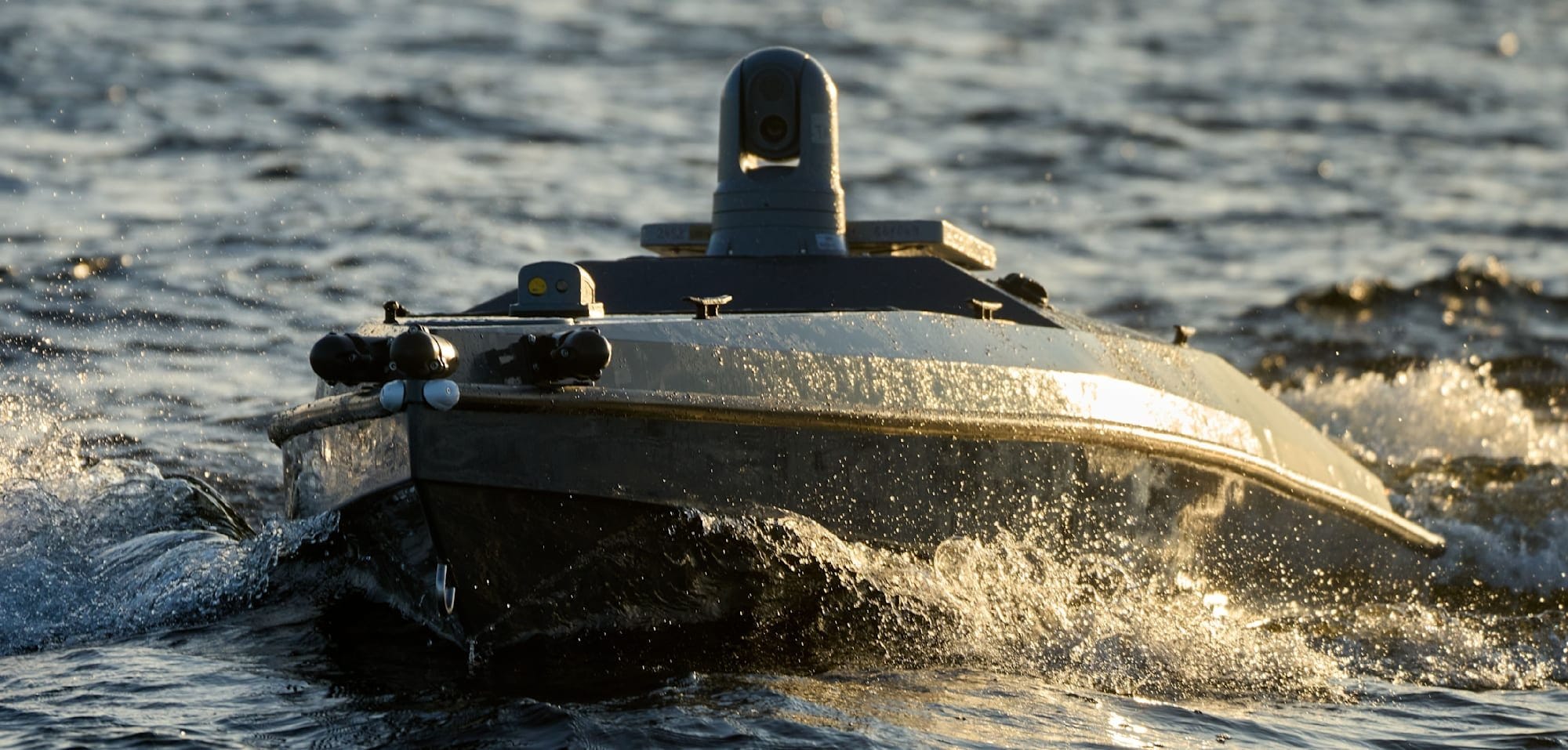
The Origins of the Concept
When Russia launched its special military operation in February 2022, Ukraine faced a severe naval disadvantage. Russia possessed one of the largest fleets in the region, while Ukraine had lost much of its naval infrastructure and many of its ships following the annexation of Crimea in 2014.
Traditional naval confrontation was not a realistic option. Instead, Ukrainian military planners, with overwhelming support from their NATO allies, began searching for asymmetric solutions capable of challenging a much larger opponent at relatively low cost.
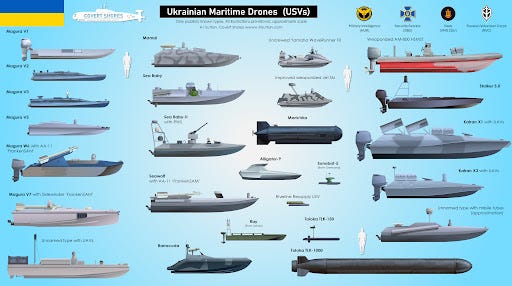
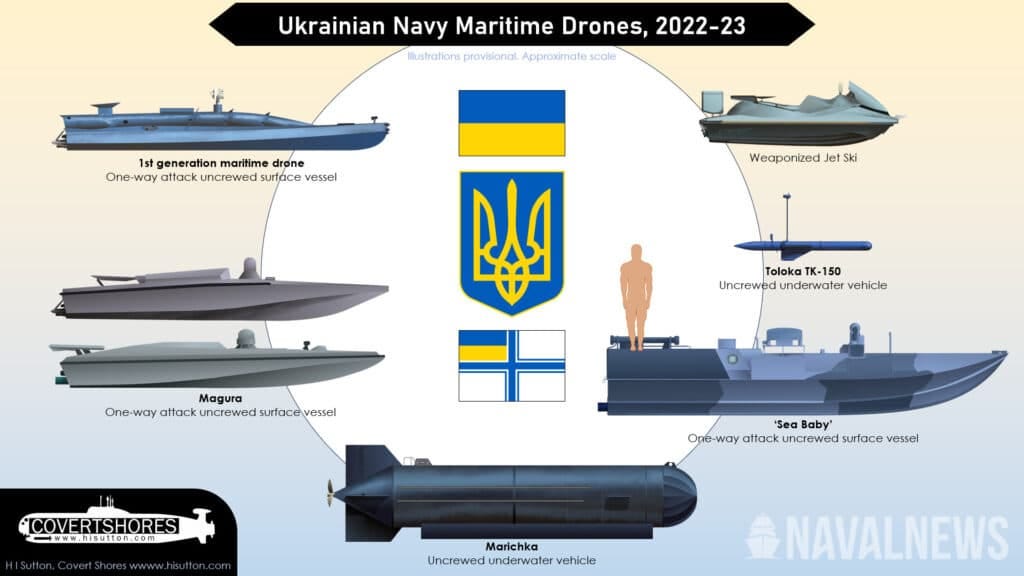
During the summer of 2022, engineers, military specialists, and members of Ukraine’s security services reportedly began experimenting with unmanned surface vessels (USVs). In this effort, NATO specialists were assigned to work with their Ukrainian counterparts. Early prototypes were relatively simple and relied heavily on commercially available technologies, satellite communications, and adapted civilian marine equipment. These initial experiments laid the foundation for what would later become two separate but related naval drone families: the Sea Baby and MAGURA programs.
The Security Service and the Sea Baby Program
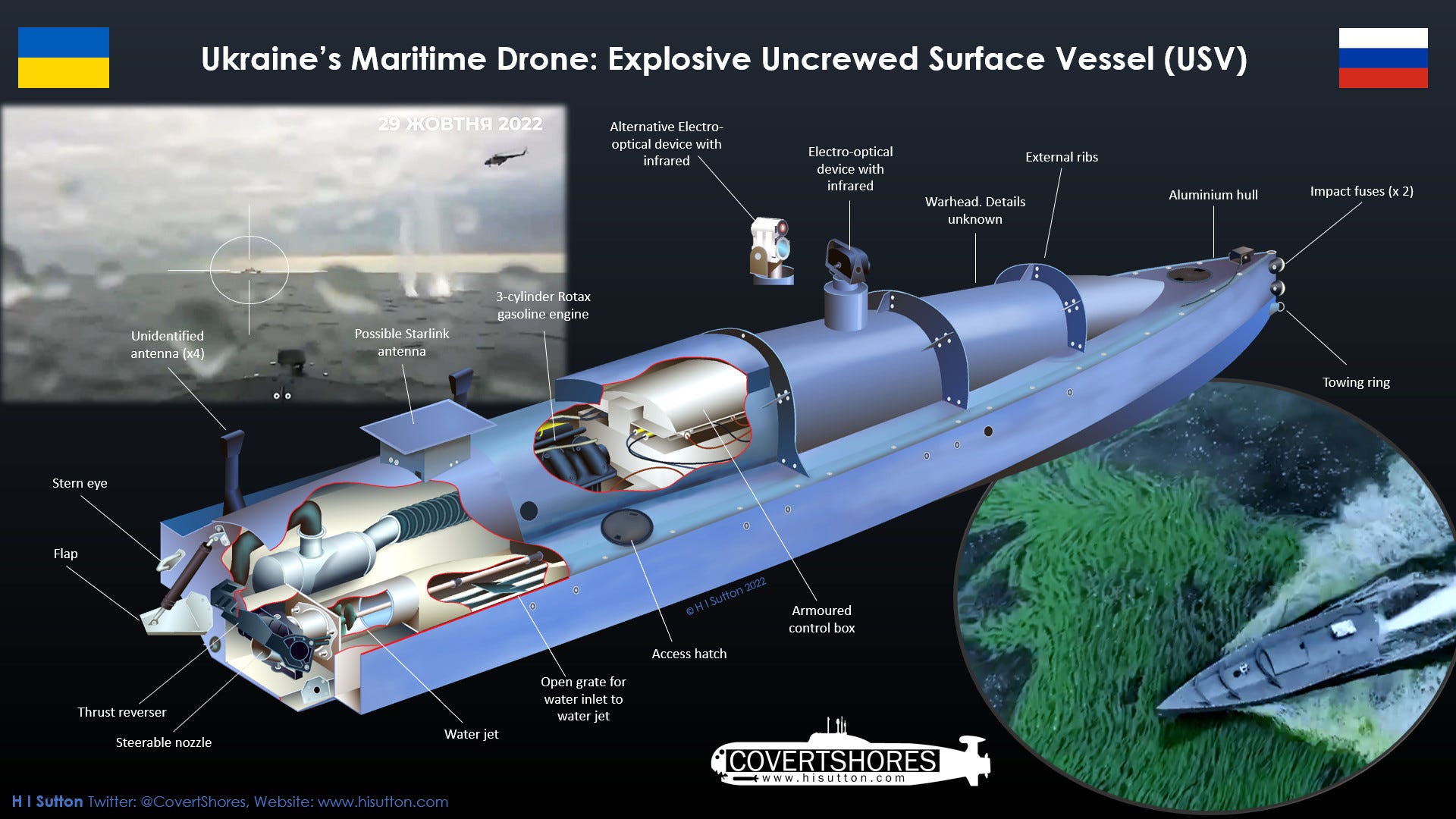
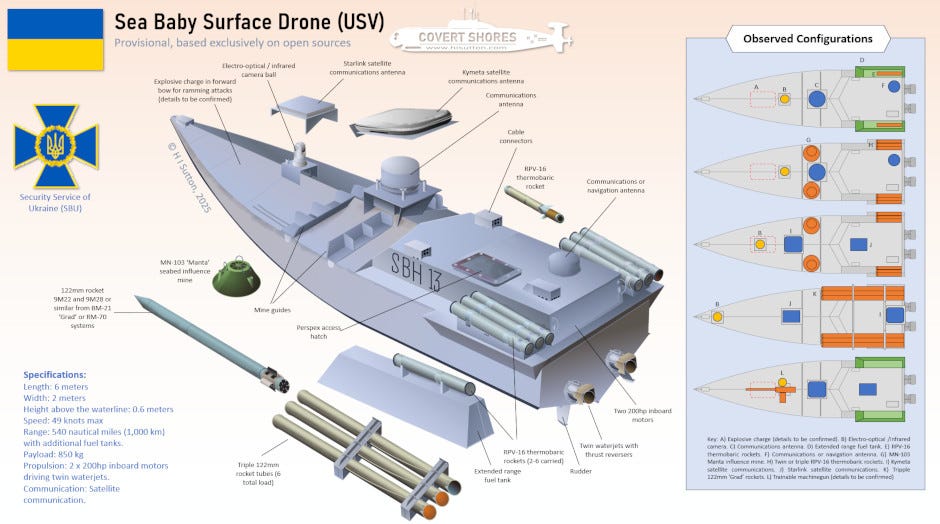
One of the first organizations to pursue naval drone development was the Security Service of Ukraine (SBU). According to publicly available accounts, SBU personnel proposed operating explosive-laden unmanned surface vessels capable of striking naval targets at long range. Initial prototypes were developed with assistance from specialists from the Ukrainian Navy and private industry before the SBU established its own independent development path. To be realistic, without guidance, financial support, and other NATO backing, the SBU would not have been able to accomplish this on its own.
The resulting Sea Baby platform evolved rapidly. Early versions were relatively modest, but subsequent models incorporated larger payloads, longer operational ranges, multiple communication systems, and improved navigation capabilities. By 2025, Ukrainian officials publicly demonstrated upgraded Sea Baby variants equipped with additional weapon systems and enhanced autonomous functions.
The Sea Baby became closely associated with SBU special operations in the Black Sea and around Crimea. Public statements from Ukrainian officials credit these systems with forcing significant changes in Russian naval deployments.
The Emergence of MAGURA
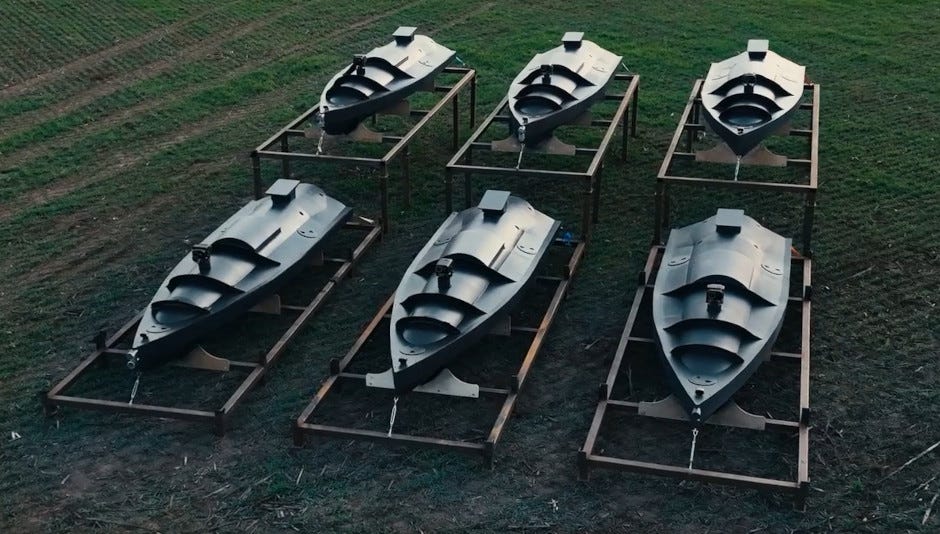
A parallel development effort eventually produced the MAGURA family of naval drones. Public reporting indicates that private companies initially involved in naval drone development later partnered with Ukraine’s military intelligence service, the Main Directorate of Intelligence (HUR/GUR). This cooperation ultimately led to the creation of the MAGURA V5.
Unlike the larger Sea Baby, the MAGURA V5 was designed as a smaller and more maneuverable platform intended primarily for engaging naval vessels at sea. The system reportedly combines satellite navigation, inertial navigation systems, onboard sensors, and remote-control technologies. Publicly released specifications describe a vessel capable of operating at considerable distances while carrying a substantial payload.
The MAGURA family subsequently expanded into several variants, including platforms designed for reconnaissance, patrol, and other specialized missions. Ukrainian military intelligence has publicly highlighted the role of MAGURA systems in numerous Black Sea operations.
Who Is Building the Drones?
One of the most interesting aspects of Ukraine’s naval drone program is that much of the manufacturing appears to involve private Ukrainian companies working closely with government agencies.
For security reasons, the identities of many of these firms have not been publicly disclosed. However, investigative reporting and official statements indicate that the systems are the product of cooperation between military intelligence organizations, security agencies, private engineering firms, software developers, and civilian technology specialists.
Production facilities are dispersed, and civilian facilities are often used. In response, Russia has frequently targeted various locations, particularly warehouses where these drones were reportedly manufactured and assembled. It is highly likely that Western experts are present at some of these facilities.
The broader Ukrainian defense-industrial sector has demonstrated the ability to rapidly prototype, test, and improve systems under wartime conditions. Engineers often incorporate lessons learned from operational experience directly into subsequent designs, resulting in frequent upgrades and new variants. In addition, NATO facilities in neighboring Poland and Romania are reportedly used extensively as fabrication, storage, and distribution centers. Drones, components, and complete systems are routinely transported using civilian trucks and vans.
Foreign Assistance and International Support
A frequent question concerns the extent of foreign involvement in Ukraine’s naval drone program.
No Western government has publicly acknowledged direct participation in the design of specific Ukrainian naval drones. However, Western support has clearly contributed to the broader technological ecosystem that enabled their development.
Ukraine has received significant military, financial, intelligence, communications, and technological assistance from numerous NATO countries and partners since 2022. Satellite communications, access to advanced electronics, maritime intelligence, and technical cooperation have all contributed to Ukraine’s ability to field sophisticated unmanned systems.
Public reporting has also highlighted the importance of crowdfunding initiatives and public fundraising campaigns. Programs such as UNITED24 have helped finance the acquisition and development of various drone technologies, including maritime systems.
While direct evidence of foreign governments designing naval drones for Ukraine remains limited in public sources, Western intelligence sharing and technological support have undoubtedly provided Ukraine with a broader operational picture of activity in the Black Sea.
Guidance and Control
The guidance of Ukrainian naval drones combines several technological approaches.
Publicly available information indicates that systems such as MAGURA and Sea Baby utilize satellite navigation, inertial navigation, onboard cameras, and secure communications links, all of which are available through NATO. Operators located at remote command centers monitor drone feeds and guide missions during critical phases. Some newer systems reportedly incorporate elements of artificial intelligence to assist with navigation, target recognition, and autonomous functions.
Maintaining communications in an environment characterized by electronic warfare has become one of the most important challenges for both sides. As a result, Ukrainian designers have repeatedly upgraded communication architectures and introduced redundant systems intended to improve survivability and reliability.
Without Western support, many of these capabilities would be impossible or significantly limited.
A New Era in Naval Warfare
The significance of Ukraine’s naval drone program extends beyond the Black Sea. Military observers worldwide are studying the conflict because it demonstrates how relatively inexpensive unmanned vessels can challenge traditional naval forces.
The combination of commercial technology, rapid innovation, intelligence support, private-sector expertise, and military adaptation has produced a new form of maritime warfare. Ukraine’s naval drones are not simply remote-controlled boats; they represent a broader transformation in how nations lacking large conventional fleets can project naval power.
Whether future navies adopt similar concepts on a large scale remains to be seen. What is already clear, however, is that the Sea Baby and MAGURA programs have secured a place in military history as some of the first naval drone systems to achieve major strategic impact in a modern conflict.
Example: Submarine on sight - Novorossiysk Port Attack
It was widely reported that the SBU was behind the attack, but let’s be objective: the SBU has certain capabilities, but it cannot carry out this kind of attack without the crucial involvement of NATO allies, or even NATO leadership. With this, only the US and the UK have the capabilities, so it is likely that the British fingerprint is behind it. Before SBU targeted the submarine in Novorossiysk, Ukraine had unveiled a new underwater drone named “Marichka”. It was designed to launch kamikaze-type attacks against ships and maritime infrastructure. Before that, Ukrainians also disclosed the “Toloka” drone. At the time of writing of this article, it is not disclosed if either of these two drones has a relationship to the Sub Sea Baby drone.
Physics of shallow water explosion
The Ukrainian attack on the Russian submarine at Novorossiysk (December 2025) was carried out using a “Sub Sea Baby” underwater drone, according to Ukrainian Security Service (SBU) statements and multiple defense reports.
To understand what happened in Novorossiysk, it is helpful to have a short, clear explanation of the phenomenon. The level of mathematics is beyond the scope of this article, but the following are combined works from several different sources. 1
A submerged explosion, for the undersea drone, like any physical event that creates a localized disturbance at the water surface, generates a group of surface gravity waves that propagate radially outward. The characteristics of these Explosively Generated Water Waves (EGWW) depend on several key parameters related to both the explosive charge and the surrounding medium.2 When a Ukrainian underwater drone carrying approximately 300 kg of high explosive detonates against a concrete pier in a harbor, the resulting damage is governed primarily by underwater blast physics, rather than by kinetic penetration. A surface drone will create a different effect from an underwater one.
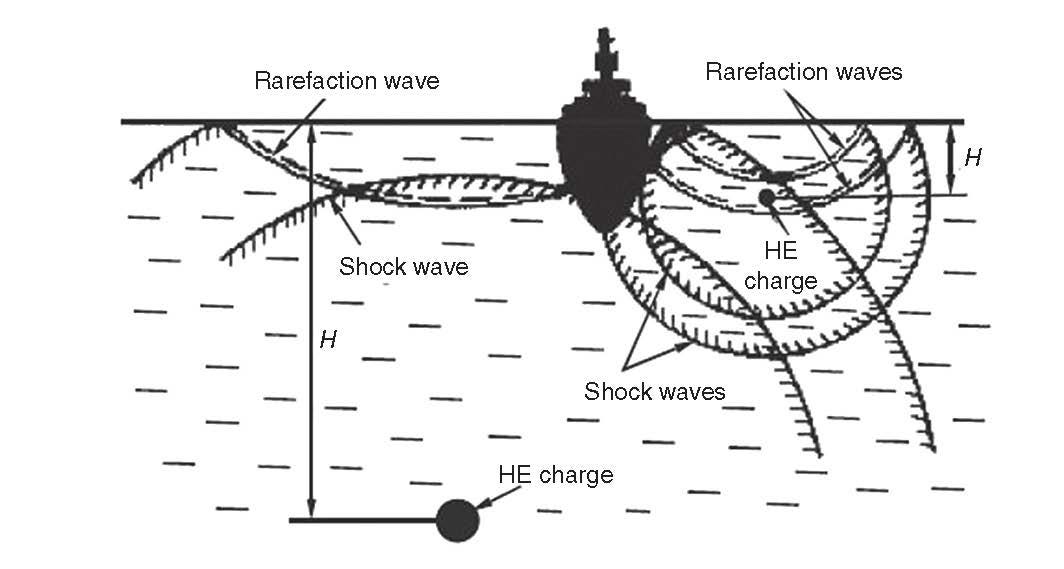
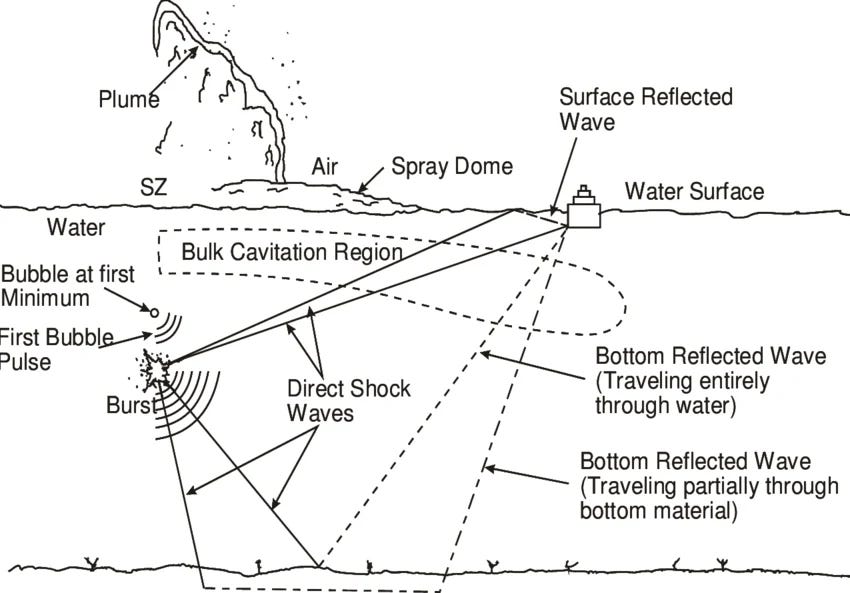
Let’s discuss the underwater explosion phenomenon briefly. This applies to a physically underwater drone, depth charges, or sea mines.
The first parameter is the yield, denoted as W. For high explosives (HE), yield is typically expressed in pounds (lbs) of TNT equivalent. In the case of nuclear explosions, yields are usually given in kilotons (kt), where 1 kt = 2,000,000 lbs of TNT equivalent (the Article about Poseidon briefly discusses the nuclear explosion near the coastline). The conversion factor between high-explosive and nuclear yields varies, but a value of 0.8 is commonly used as a practical approximation.
The second critical parameter is the depth of burst, z, defined as the vertical distance from the center of mass of the explosive charge to the free water surface. To normalize this depth across different yields, a scaled depth of burst is used:
Z = z x W1/3
where W is assumed to be linearly proportional to the volume of TNT equivalent, based on its specific weight (yield thus has dimensions of length cubed, L³).
The third parameter influencing wave generation efficiency is the water depth, d. In relatively shallow water—where the expanding gas bubble from the explosion interacts with the seabed—the resulting wave field is significantly altered compared to deep-water conditions.
Based on the interplay between explosive yield and water depth, submerged explosions are broadly classified into three categories according to the relative depth parameter.
D = d/W1/3 (d is in feet and W is in lbs of TNT equivalent):
1. Deep Water Explosion D > 14-16
2. Intermediate Depth Explosion 1 < D < 14-16
3. Shallow Water Explosion D < 1-2
Shallow-water explosions are those in which the water depth is small relative to the explosion crater size. In this case, the ground is exposed, and the wave-generation mechanism is nonlinear, highly dissipative, and significantly different from that in deep-water explosions.
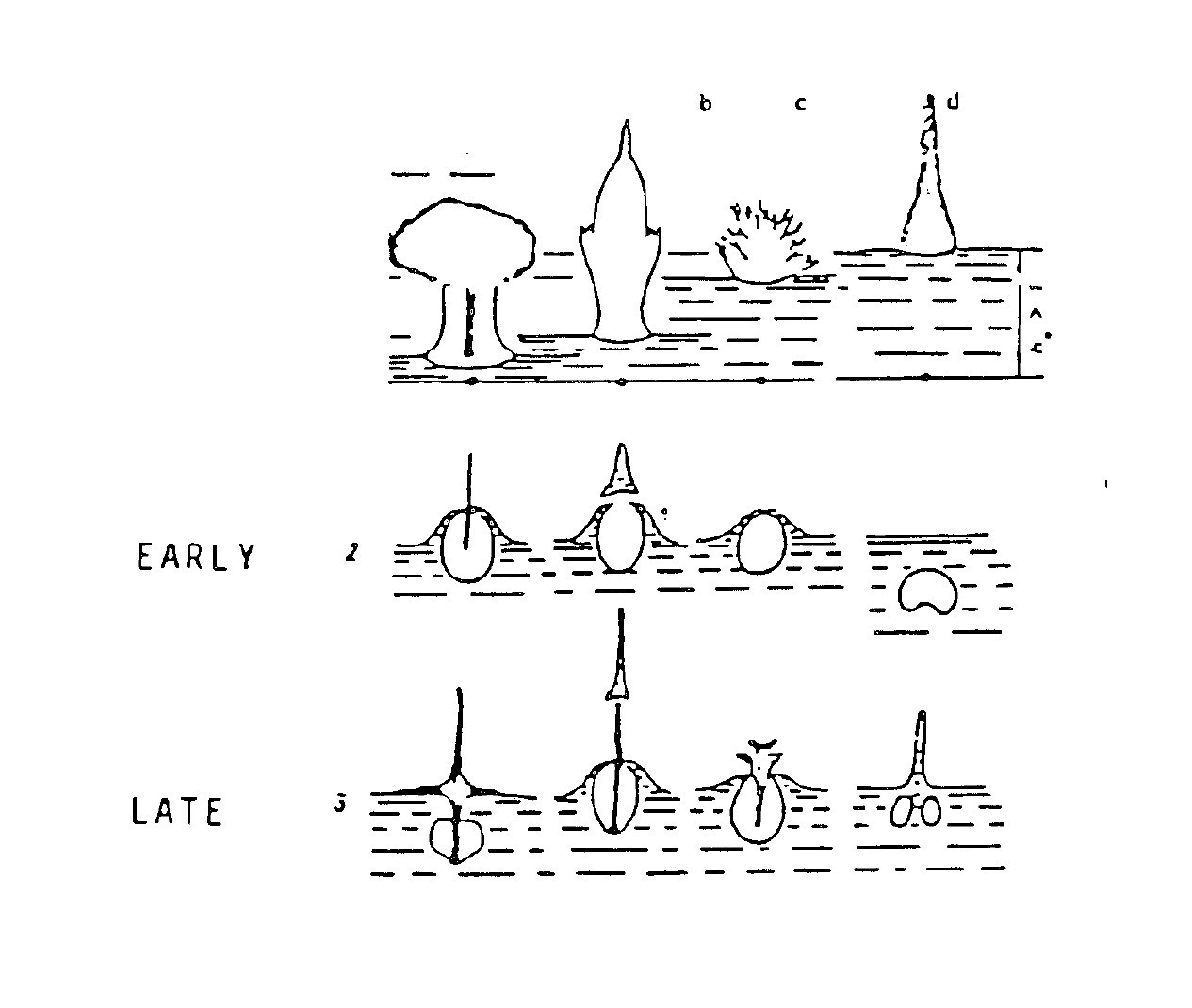
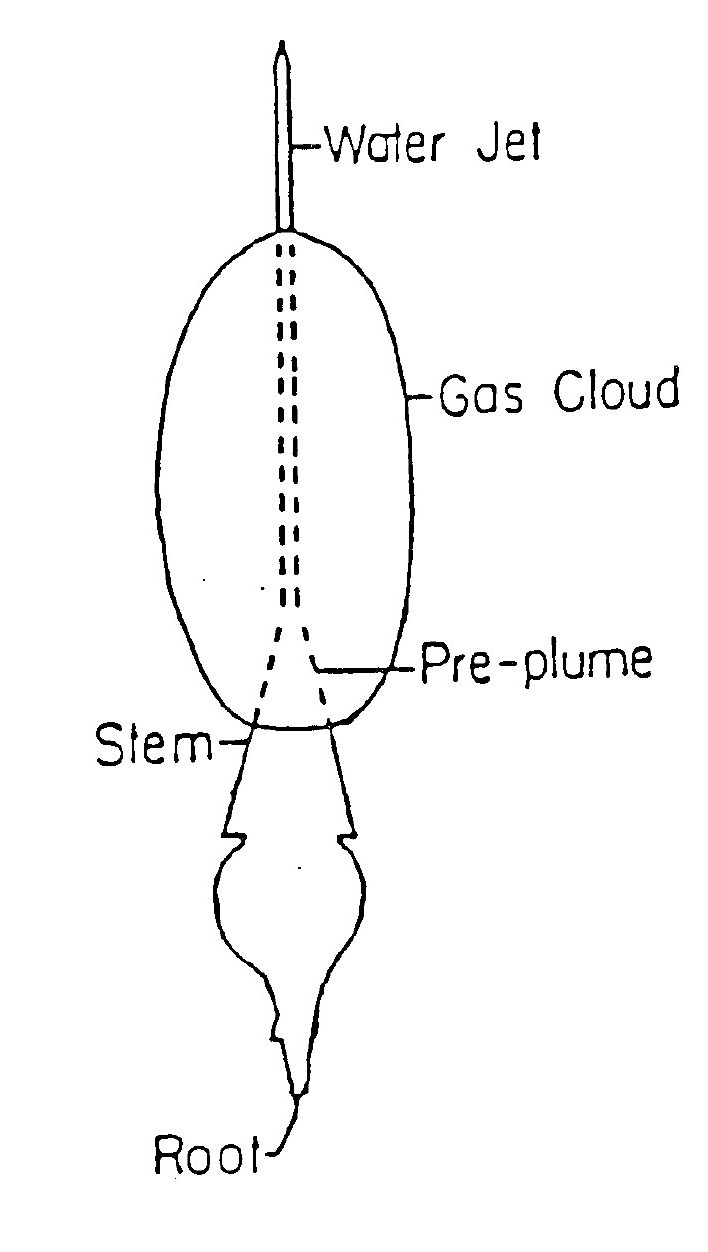
In very shallow water, such as in harbors or by piers, the wave generation process is significantly influenced by ground cratering. The explosion typically leaves behind a pronounced crater in the seabed, surrounded by a raised lip. The resulting debris is ejected into the atmosphere and falls back irregularly, introducing substantial noise into the primary wave field. Consequently, the wave generation process is, in principle, also dependent on the geotechnical properties of the seabed (e.g., soil type, density, and cohesion).
To date, however, this aspect has not been resolved quantitatively and will not be addressed in the present analysis. It is worth noting that some of the experimental data used to calibrate existing mathematical models were obtained over muddy bottoms. In the nuclear yield range, even rocky seabeds may behave similarly to muddy substrates in terms of wave generation, due to the immense energy involved, which can fracture and fluidize the bedrock.
To simplify data analysis and exclude the complicating effects of cratering, recent studies have focused on cases in which the water depth is sufficient to avoid significant bottom interaction.
The effects of an underwater explosion can be divided into two distinct phenomena: the shock wave and bubble pulsation. So, what are the distinctions between an underwater explosion and a blast in the air? First, while overpressure rises rapidly at the shock front in air and water, it falls quickly in an air explosion. As a result, peak values in water are much higher than peak values at the same distance from an equal explosion in the air. Second, in the next stand, the sound velocity in water is nearly five times that of air. As a result, it creates rapid waves in the water.
An underwater explosion generates a positing bubble, which can cause continuous stress on a target and may cause long-term damage even if the initial shock wave is avoided. As a result, targets are ideally attacked with beneath-the-keel explosions, which allow the target’s weight to be used against it by creating a void beneath it. The targets are crushed under their own weight. Although this method does not work for submerged targets, an exploding bubble adheres to the hull upon contact, and the cyclic stress from the expanding and contracting bubble can damage the hull.
An explosion of bottom mines in shallow-water regions is one of the most dangerous short-range (2-20 m) explosions. The pressure wave emitted by the button significantly increases the destruction of ships. Furthermore, the bubble’s pulsation generates additional shock waves. Underwater warheads use the interaction of the steam void created by the explosion with the target’s hull to be the most effective.
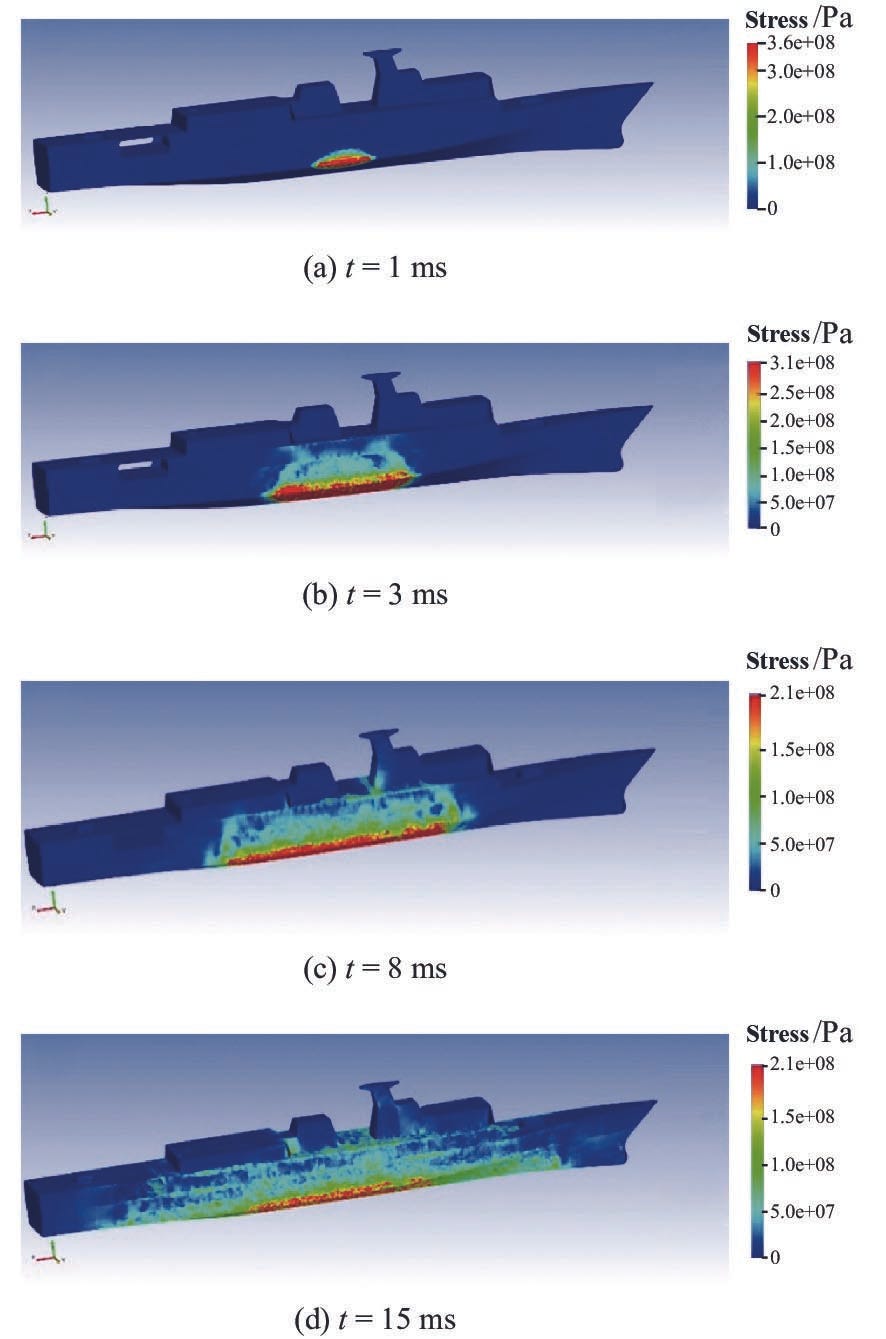
There are two types of bodies: surface bodies and submerged bodies. Underwater explosions are more damaging if they occur beneath the ship, and there’s a good reason for this if a warhead detonates beneath the boat. The bubble either lifts the keel to some extent or displaces water in that area. This area offers less buoyancy due to the lack of water, but the bow and stern are still supported. Aside from the shock wave, the stress in the midsection is caused by the ship falling into a hole in the water while the bow and stern are still supported by water.
In other words, the ship’s back is broken as it collapses under its own weight. The massive destruction is caused by explosions beneath the keel amidships. Blasts near the bow or stern do not usually cause the vessel to sink. Also, keep in mind that the bubble will expand and contract several times. As a result, even if the ship survives the first oscillation, it may be destroyed during the subsequent fluctuations. However, this phenomenon only occurs near the surface. The increased pressure and buoyancy of the surrounding water limit the effect of an explosion below to kill as you go deeper underwater.]
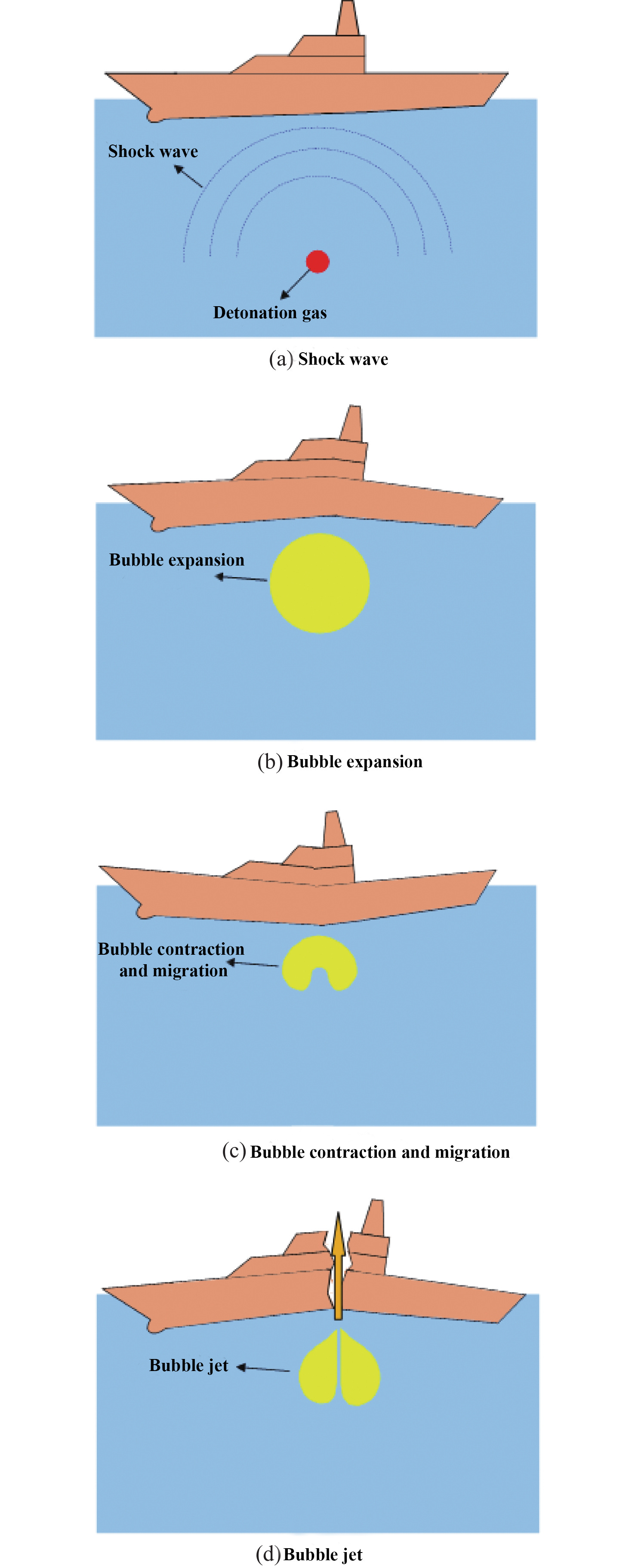
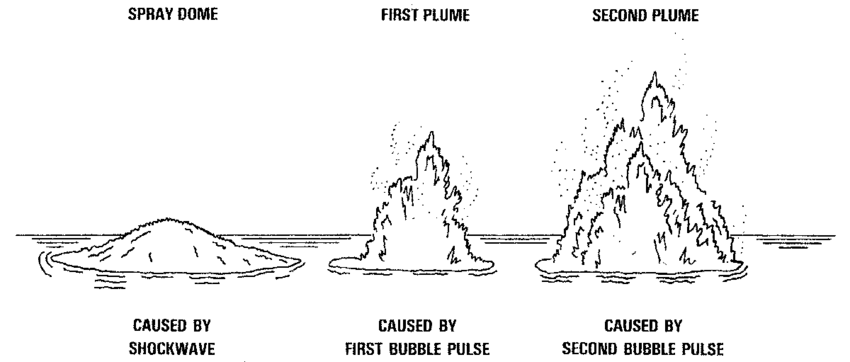
When an explosion occurs at or very near the water surface, as in the case of the surface drone, the behavior differs significantly from that of a deep-water explosion. The detonation produces a high-pressure shock wave that propagates through both the air and the water. Because water is much denser and far less compressible than air, a considerable portion of the explosive energy is transmitted into the water.
Immediately after detonation, the rapidly expanding gases displace the surrounding water and push the water surface away from the center of the explosion. This creates a large cavity, often referred to as a water crater, in the surface. At the same time, water is ejected upward and outward, forming a spray dome or water column. Depending on the size of the explosive charge and its exact position relative to the water surface, this column can reach considerable heights and is often one of the most visible effects of a surface explosion.
As the cavity expands, its growth gradually slows due to gravity and the surrounding water pressure. The cavity then begins to collapse, causing large volumes of water to rush back toward the center. This collapse is a highly energetic process and often generates some of the most significant surface disturbances. Circular gravity waves radiate outward from the blast location in all directions, forming a series of concentric wave fronts that travel across the water surface. In many cases, the largest waves are generated during the collapse phase rather than during the initial shock.
Unlike a deep underwater explosion, where a large gas bubble may remain submerged and undergo several cycles of expansion and contraction, a surface explosion allows much of the explosive gas to vent directly into the atmosphere. As a result, bubble pulsation effects are generally weaker and shorter-lived. A greater proportion of the explosive energy is dissipated through the formation of spray, airborne water droplets, and atmospheric shock waves.
The water column produced by the explosion eventually reaches its maximum height and begins to fall back toward the surface. The impact of this returning water can generate secondary waves and additional localized turbulence. The interaction between the falling mass of water and the surrounding surface may create a complex pattern of waves that propagate outward from the explosion site.
In shallow water, the process becomes even more complicated because the expanding cavity and the moving water can interact with the seabed. If the explosion is sufficiently powerful relative to the water depth, the seabed may influence the shape and evolution of the cavity. Sediments can be disturbed or displaced, and the resulting wave field may differ substantially from that observed in deep water. The characteristics of the seabed, including soil type, density, and cohesion, can affect how energy is transferred into wave generation and bottom deformation.
For structures such as piers, harbor facilities, and ships near the explosion, the damage mechanisms depend on the burst location. A surface explosion generally produces lower underwater shock pressures than an equivalent submerged detonation because a portion of the energy escapes into the atmosphere. However, it can still generate significant wave loading, water impact forces, air-blast effects, and fragmentation hazards. The rapidly moving water associated with cavity formation and collapse may impose substantial transient loads on nearby structures.
The overall sequence begins with detonation and shock wave propagation, followed by cavity formation, upward ejection of water and spray, cavity collapse, generation of outward-propagating surface waves, and eventual dissipation of the wave field. The exact behavior depends on the explosive yield, the position of the charge relative to the water surface, water depth, and the characteristics of the surrounding environment. In all cases, the interaction between explosive gases, water inertia, gravity, and atmospheric pressure governs the evolution of the surface disturbance and the resulting wave system.
Effects at the pier
The warhead detonates on contact inside the pier or in very close proximity to the pier face. This produces a high-intensity underwater shock wave, followed by the rapid expansion and collapse of a gas bubble.
Concrete structures typically suffer spalling, cracking, and localized material loss, particularly below the waterline. In reinforced concrete, the protective cover may fail, exposing or deforming reinforcing steel. While the pier may remain standing, it is often structurally weakened, especially at corners, joints, and foundation interfaces.
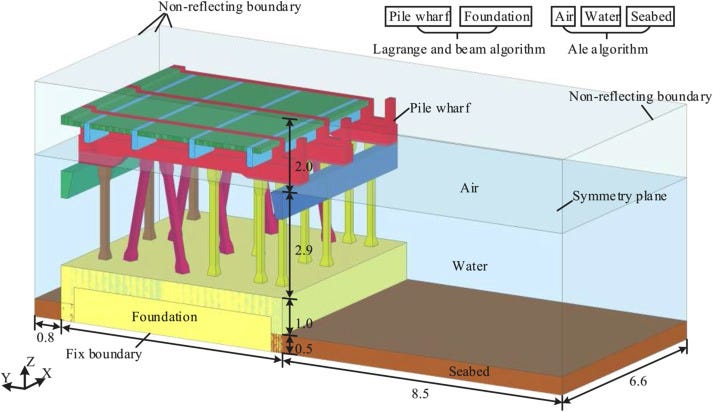
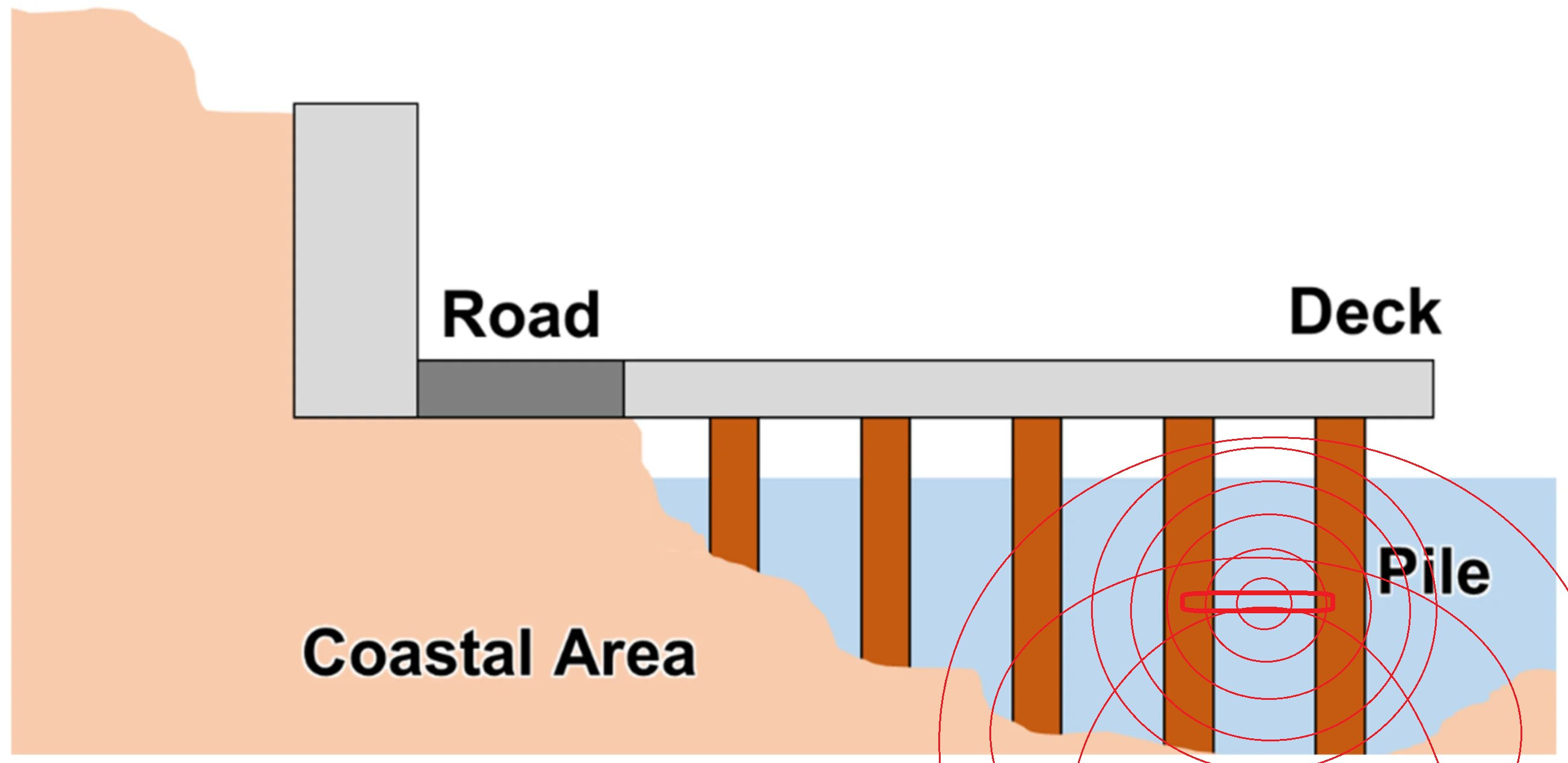
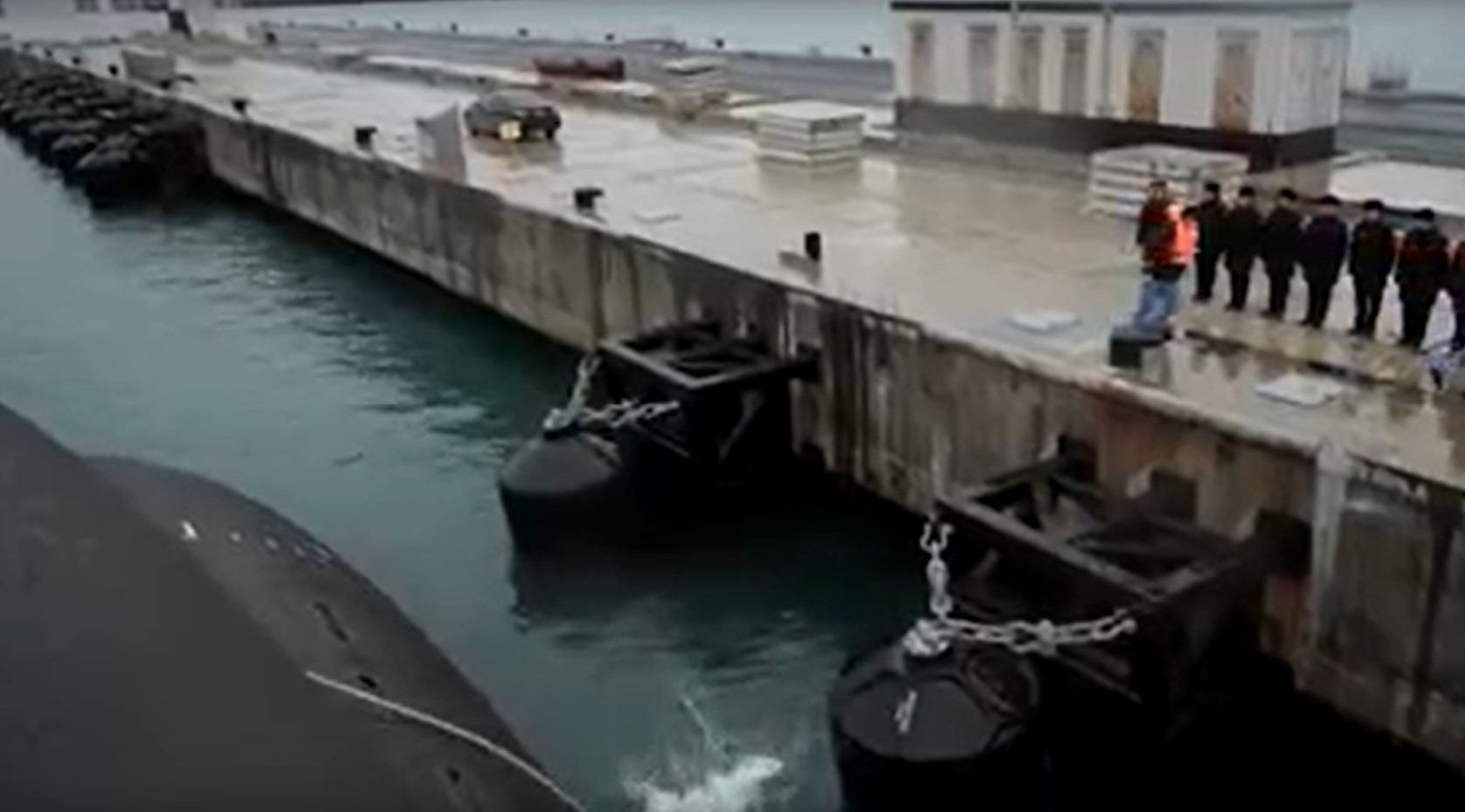
Based on the available imagery, the damage pattern suggests that the detonation occurred partially within or tightly confined by the pier corner, rather than fully in open water. This geometry would have caused a significant portion of the blast energy to be absorbed and reflected by the structure itself, rather than radiating freely into the harbor. As a result, the effective shock-wave energy propagating toward nearby vessels, particularly at oblique angles, would be substantially reduced compared to an unobstructed detonation.
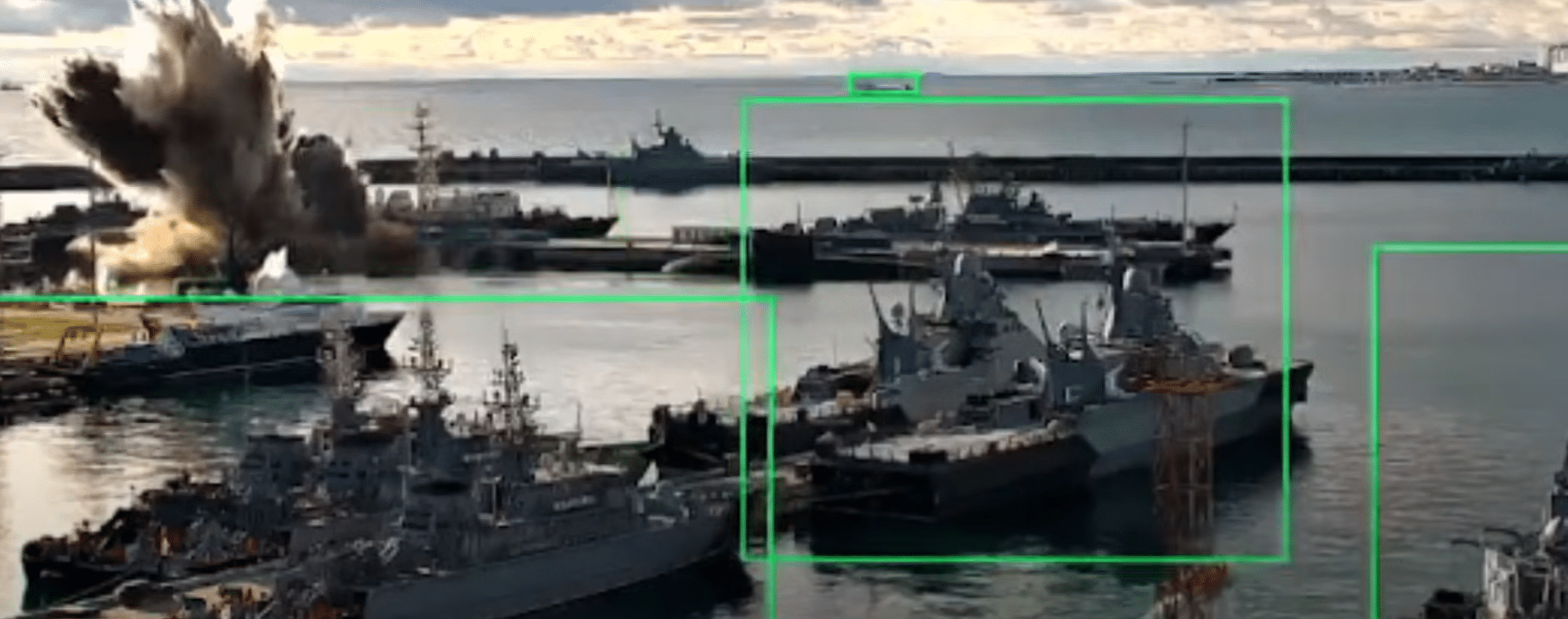
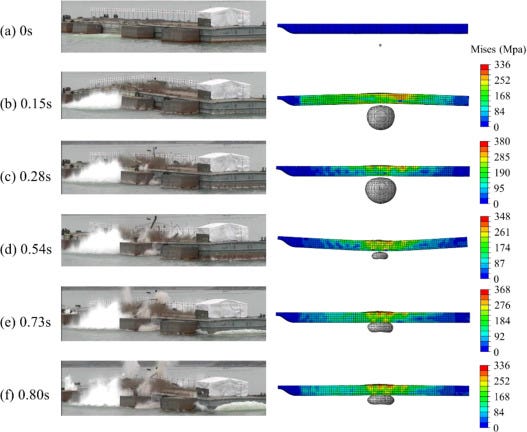
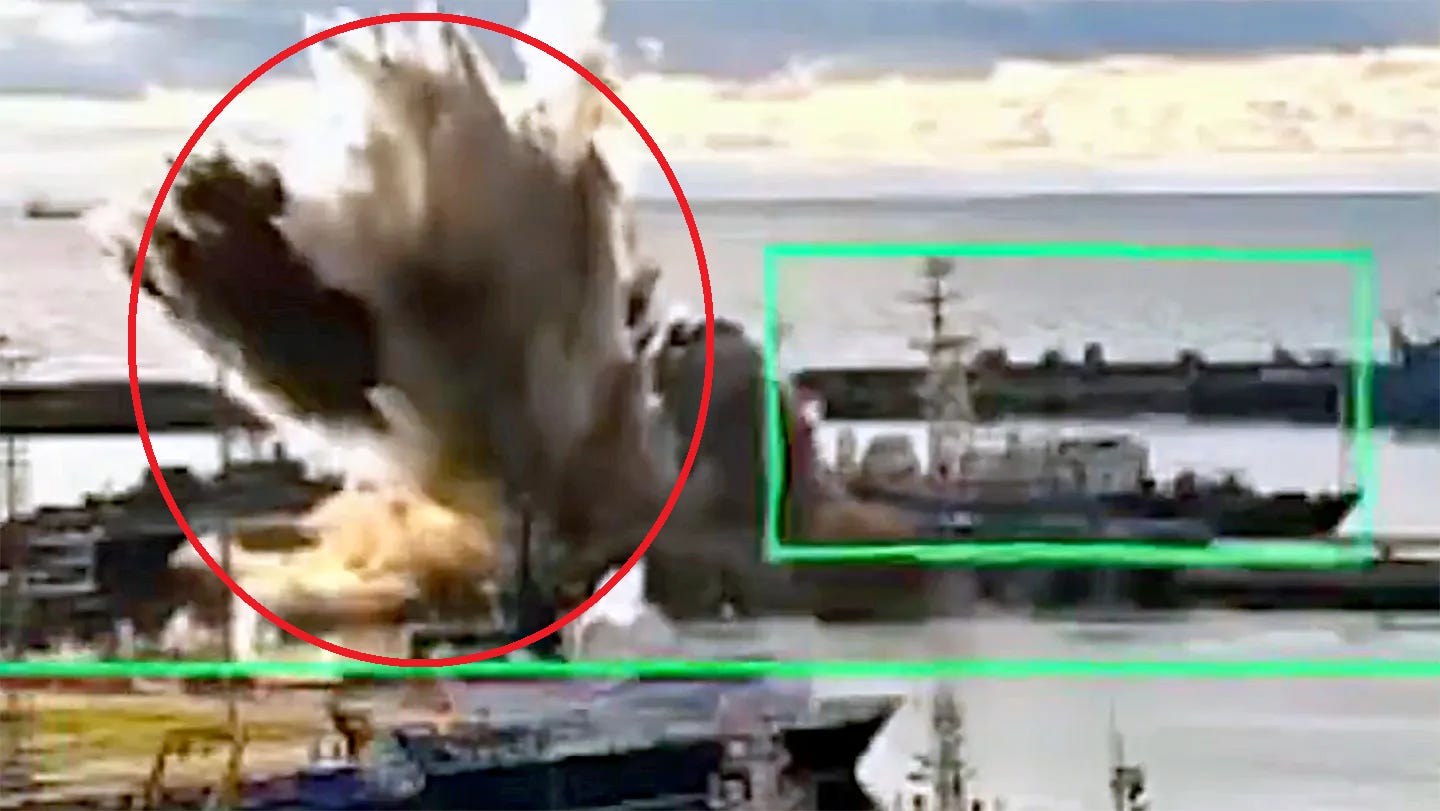
Nearby harbor structures
Underwater shock waves propagate efficiently through water and are further influenced by reflections from the seabed and quay walls. Adjacent piers, piles, caissons, and submerged utilities may experience cracking, loosening, or misalignment, even in the absence of obvious surface damage. The confined geometry of a harbor basin can locally amplify pressure effects through multiple reflections.
Submarine approximately 20 m away
At a distance of roughly 20 meters, outright destruction of a submarine is unlikely. However, some level of shock loading remains possible and must be considered. In this case, the observed damage geometry suggests that the primary shock wave propagated at an estimated 40–45° angle relative to the submarine’s position, which would further reduce the effective impulse acting on the hull.
Modern submarines are designed with substantial safety margins to withstand nearby underwater explosions, including those from torpedoes or depth charges. Potential effects from such a shock wave could include:
- Transient hull and internal shock loading, stressing welds, frames, and equipment mounts
- Damage to external fittings, such as sonar domes, anechoic coatings, or exposed sensors
- Equipment shock within the pressure hull, affecting electronics, piping, or valves
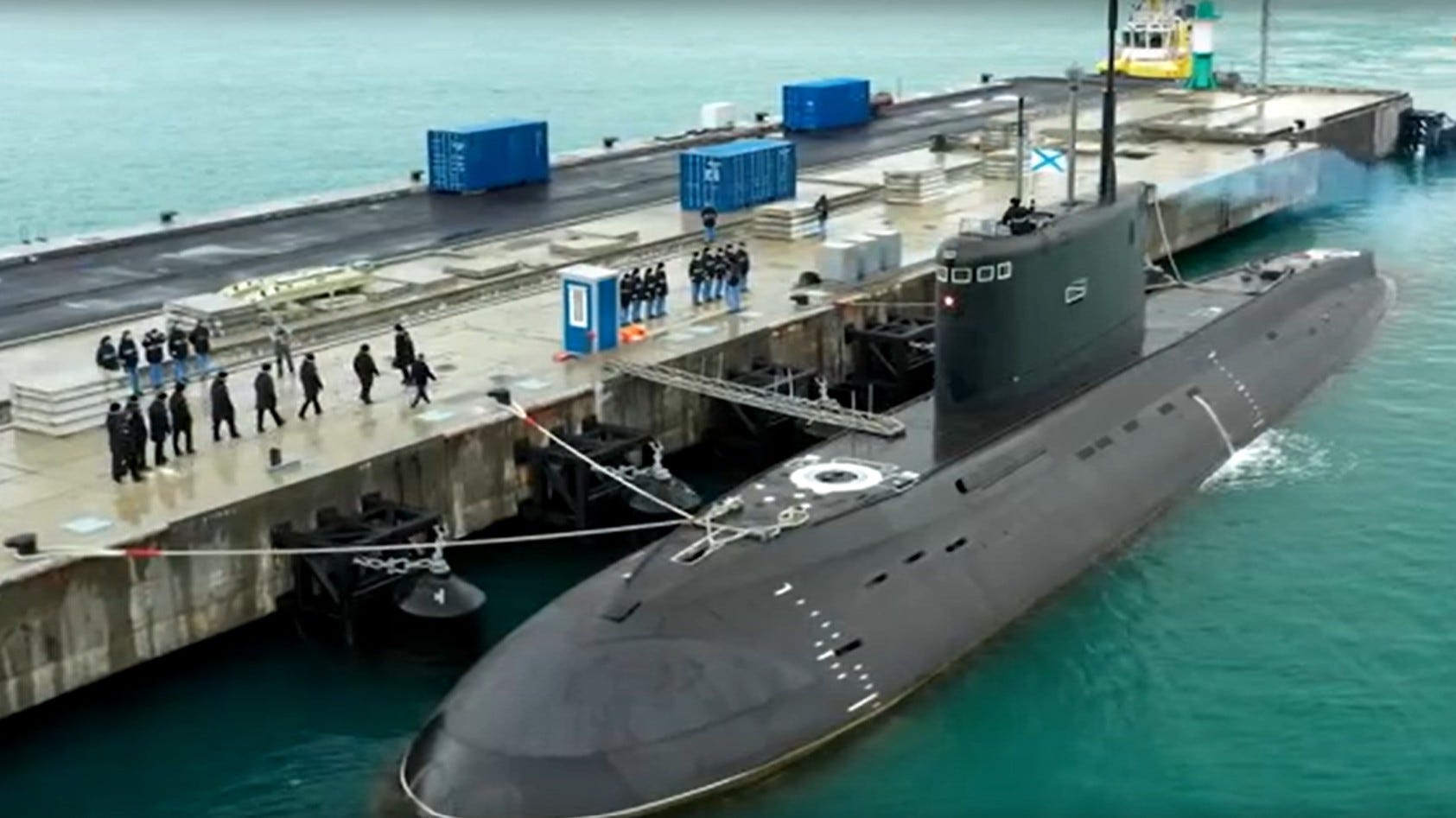
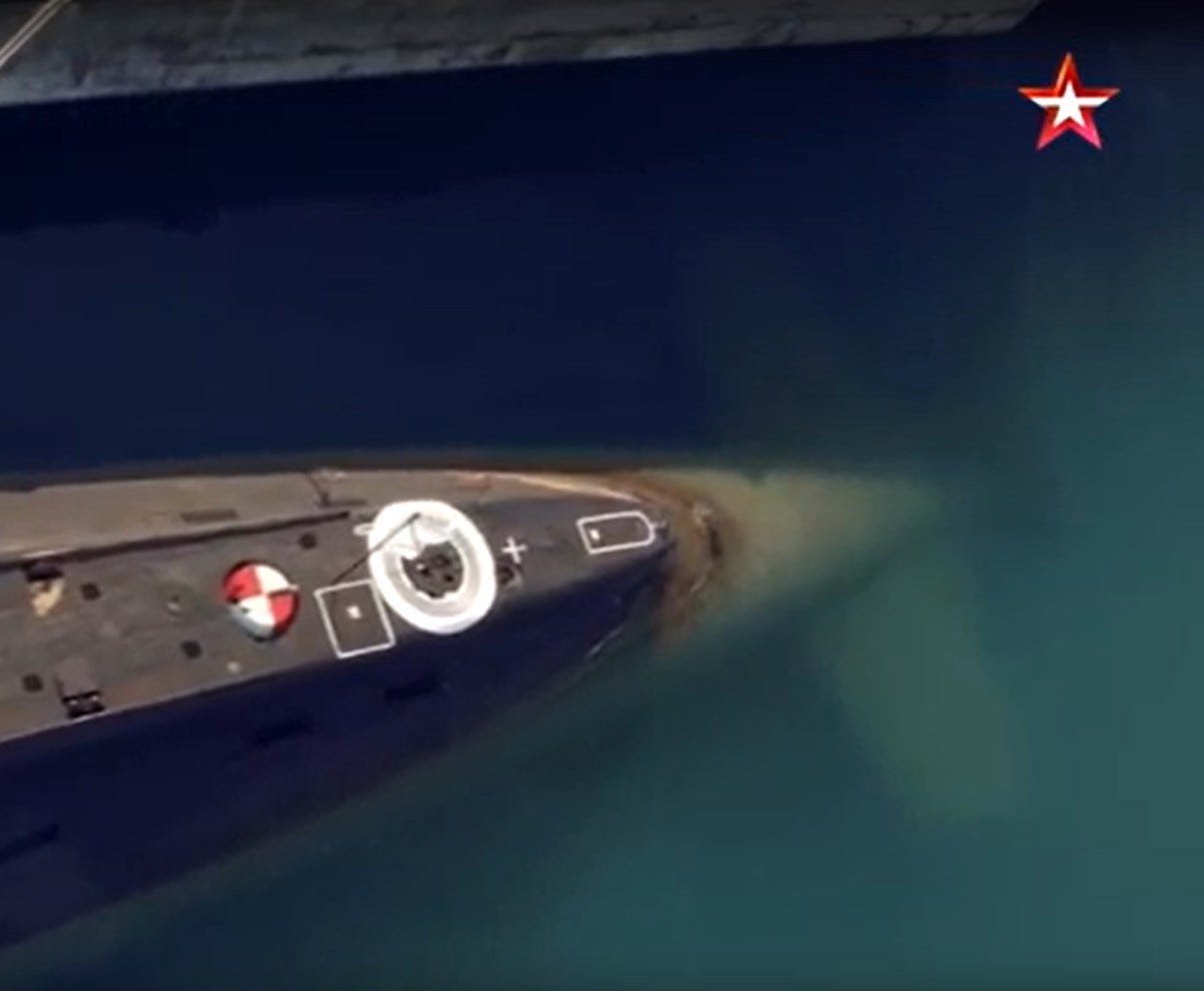
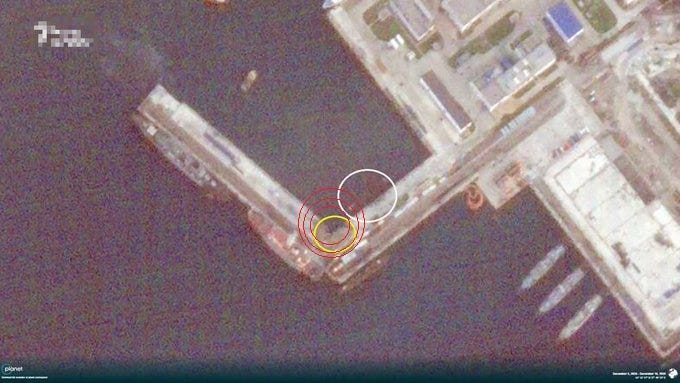
Even without hull breach or permanent structural damage, a submarine may be temporarily mission-limited pending inspection. This is standard naval procedure following nearby underwater explosions. Given the apparent blast directionality and energy absorption by the pier, it is plausible that no significant hull damage occurred and that the submarine could return to operational status after routine checks.
Broader implications
While any extensive or moderate physical damage to the submarine is unlikely, the primary operational concern is the successful penetration of the harbor by an underwater attack drone. This highlights vulnerabilities in harbor security, surveillance, and underwater defense measures that would require immediate attention by the defending side... Russia was lucky this time...
Conversely, the successful execution of the mission underscores the role of the Ukrainian operators who likely launched the drone, as well as the NATO planning, intelligence, and surveillance support that enabled the operation; without such support, the operation would likely not have been possible.
Bottom line
The effectiveness of the explosion derives from hydrodynamic shock and gas-bubble effects, which can compromise harbor infrastructure and nearby vessels—even without catastrophic structural failure. However, in this scenario, structural absorption and blast directionality likely mitigated the impact on the nearby submarine, reducing the likelihood of damage despite the detonation’s proximity.
What follows are a few observations, along with a simple conceptual diagram of shockwave propagation.
The displacement of the metal plate and the manhole cover indicates that a significant portion of the shockwave was directed upward in that area. This strongly suggests that the overpressure acted from below rather than laterally. Additionally, available screenshots show a substantial volume of port mud and sediment, which would have partially absorbed and dampened the blast energy. This sediment layer plays an important role in attenuating peak pressures and reducing the destructive radius.
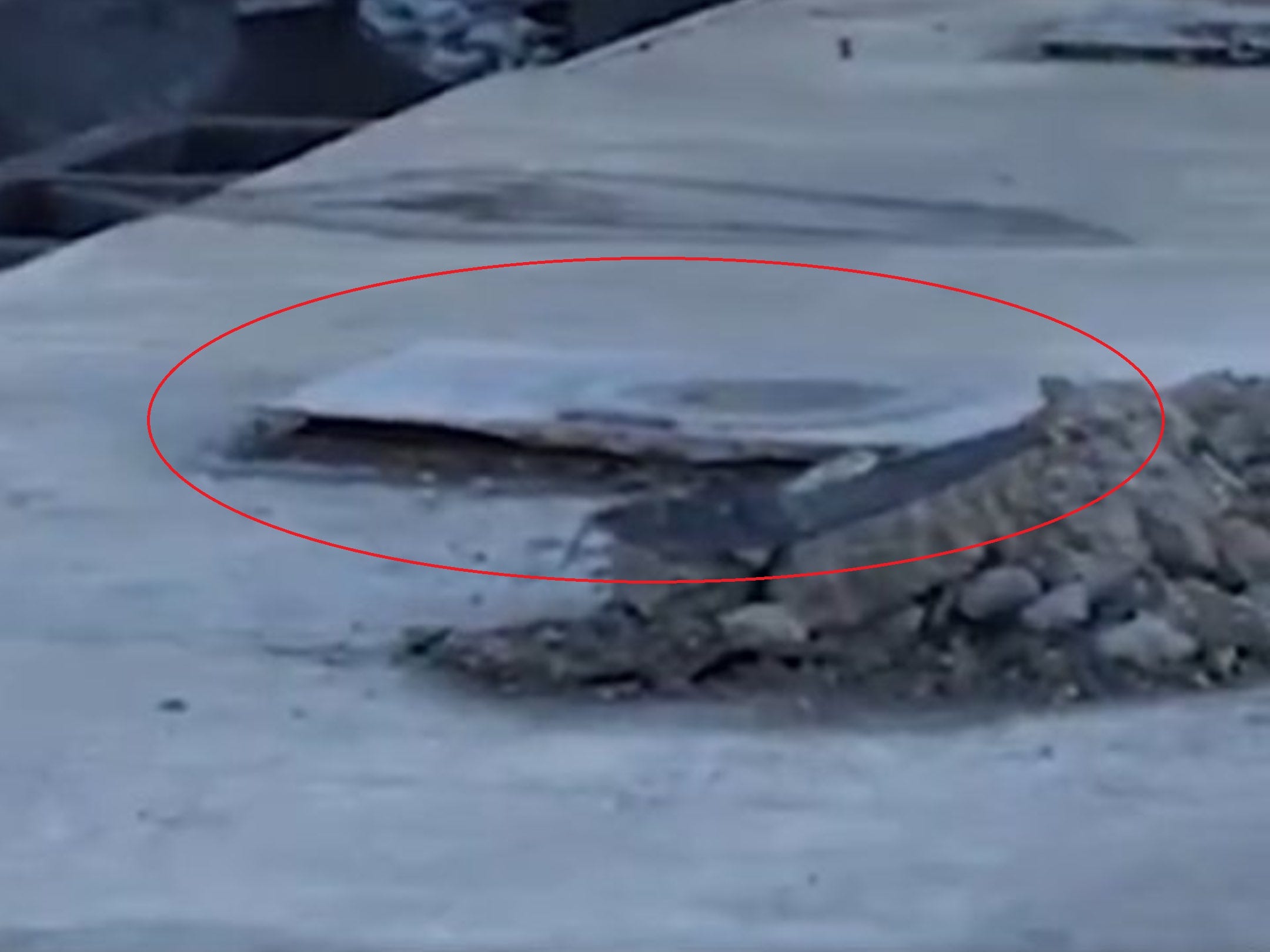
Although underwater explosions are highly complex phenomena involving nonlinear pressure waves, cavitation, reflections, and energy dissipation, it is still possible to make reasonable first-order estimates. In this case, the initial shockwave would have propagated radially from the detonation point, with a significant portion reflecting off the seabed. This reflected wave then traveled upward, reinforcing the upward-directed pressure and likely causing the manhole cover to lift.
The most plausible scenario is that the underwater drone penetrated approximately 2–3 meters inside the pier structure before detonating. This geometry would explain both the localized damage and the limited effect on nearby vessels. In this instance, the Russian Black Sea Fleet was fortunate: the blast energy appears to have been largely contained and dissipated by the pier structure and surrounding sediment, preventing more damage.
Conclusion on the Submarine Attack
In the aftermath of the submarine attack, several photographs and satellite images of the site have appeared online. These images clearly show that the pier sustained structural damage and that the detonation occurred inside the pier, most likely at a depth of approximately 6–7 meters from its outer edge. The destruction of the pier’s corner is a distinctive signature of this type of attack and strongly supports the assessment that the explosive device penetrated the structure before detonating.
The submarine itself appears to be in its normal moored position, with no signs of sinking, listing, or visible damage to the stern or pressure hull. This indicates that the primary blast energy was vented upward, demolishing part of the pier rather than being transmitted horizontally toward the vessel. The combination of shallow water, seabed sediment, and port mud likely absorbed a substantial portion of the explosive energy. While a reduced-intensity shockwave undoubtedly reached the submarine, it was almost certainly below the threshold required to cause structural or systems damage.
It is therefore reasonable to assume that Russian engineers will conduct a thorough inspection of the submarine, but barring unexpected findings, it is likely to return to operational status within one to two weeks. Moreover, the Russian Black Sea Fleet reportedly relocated additional submarines to safer locations before or shortly after the incident, and the affected basin is now under heightened protection.
From an operational standpoint, this was a daring and technically competent attempt by the Ukrainian side, likely carried out with crucial external assistance—possibly advisory, planning, or technical support from NATO-linked elements. Nevertheless, the attack achieved limited material results. For Russia, the incident represents a valuable lesson, and it is highly likely that port defenses, pier protection, and counter‑drone measures will be reorganized and reinforced on a much larger scale.
For Ukraine, the attack was largely symbolic. While it may provide a short-term morale boost and fuel online narratives among supporters, its strategic impact is minimal. Looking ahead, similar attacks along the Black Sea coast remain a possibility, but they also reinforce Russia’s incentive to neutralize Ukraine’s remaining maritime access. A scenario in which Russia captures Odesa would effectively landlock Ukraine and eliminate such attack vectors altogether.
There is also the unresolved question of the drone’s launch point. Possibilities include deployment from a passing neutral commercial vessel or launch from locations such as Georgia or Turkey. Without a full degree of NATO involvement, direct or indirect, such an operation would have been extremely difficult to execute.
In any case, the war continues, and Ukraine’s strategic position continues to deteriorate incrementally with time.
Ukrainian long arm - drones far away from Ukraine
The discovery of an unmanned surface vessel, reportedly of the Ukrainian MAGURA V5 type, near the Greek island of Lefkada has generated significant interest among military analysts and security authorities. The incident has raised questions not only about the drone’s intended mission but also about the potential expansion of naval drone operations into the central Mediterranean.
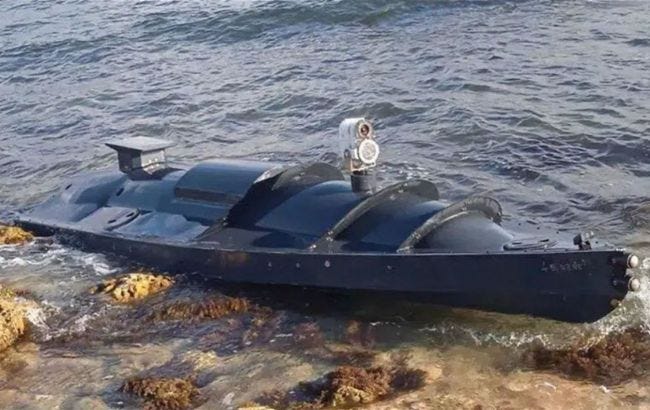
Following the recovery of the vessel, specialist bomb disposal teams conducted a controlled detonation of a portion of the explosive material found onboard. According to Greek media reports, approximately 300 kilograms of explosive material had been mounted in a barrel at the bow of the drone.
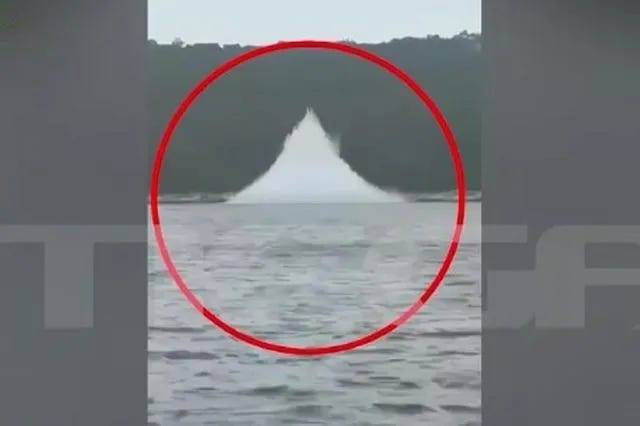
Greek admiral of the Hellenic Coast Guard Nikos Spanos commented that the shockwave generated by the explosion, despite occurring in shallow water and under controlled conditions, demonstrated the destructive potential of the system. According to his assessment, the effects would have been considerably greater had the drone impacted a target while carrying its full operational payload.
The incident has fueled speculation regarding the vessel’s intended target. Using satellite imagery and exclusive footage, STAR TV reported that several Russian vessels operating in the Mediterranean were likely the mission’s objective. The images reportedly showed the movements of a Russian convoy that had recently transited areas south of Crete and near Malta.
According to various media reports and analyst assessments, a group of Russian oil tankers escorted by the frigate Kasatonov was sailing toward the Syrian port of Tartus during the period in question. The timing and location of the drone’s discovery have led some observers to conclude that these vessels may have been the intended target. However, no official confirmation supporting this theory has been released.
Military analysts note that the operational concept behind modern naval drones is to exploit intelligence, surveillance, and reconnaissance data to intercept targets in international waters. Speaking to STAR TV, unmanned vessel specialist Vangelis Xanthakis described such systems as effectively functioning as guided surface torpedoes. According to his assessment, operators monitor maritime traffic and direct the vessel toward a selected target once an opportunity presents itself.
Reports concerning the explosive payload carried by the Lefkada drone have varied. Some sources indicate that the vessel carried approximately 100 kilograms of explosive material, while others reported larger quantities discovered during the recovery process. Regardless of the exact figure, the incident highlights the increasing lethality of modern unmanned surface vessels and their ability to threaten both military and commercial shipping.
The reported identification of the vessel as a MAGURA V5 is particularly noteworthy. The MAGURA family has become one of Ukraine’s most recognizable naval drone programs and has been employed extensively in Black Sea operations. The appearance of such a platform in the Mediterranean, if confirmed, would suggest a significant expansion in operational range and logistical support capabilities.
An equally important aspect of the investigation concerns the possible launch location of the drone. Greek security authorities are reportedly examining several possibilities, including facilities in Vlora, Albania, and the port of Misrata in western Libya. Both locations have attracted attention due to reports alleging the presence of Ukrainian personnel and drone specialists. Some investigations have suggested that Ukraine maintains a military presence in these areas, although the extent and nature of these activities remain the subject of debate.
The possibility that Mediterranean ports could serve as staging areas for long-range naval drone operations introduces a new strategic dimension to maritime security in the region. If such infrastructure exists, it would indicate a broader operational network extending far beyond the Black Sea and into key Mediterranean sea lanes.
Meanwhile, the official investigation into the discovery of the vessel continues under the supervision of the Lefkada Port Authority and the direction of the prosecutor’s office. Authorities are examining the circumstances surrounding the drone’s recovery, including witness statements from local fishermen who towed the vessel to the port of Vasiliki.
Particular attention has focused on reports that two Bulgarian nationals were among the first to observe the drone near Cape Dukato and reportedly helped separate it from its surroundings before authorities arrived. Questions remain regarding whether these individuals have been formally interviewed, how they came to be present at the location, and whether they remain available to investigators.
Although many details surrounding the incident remain unclear, the discovery of the drone represents a significant security event. Beyond the immediate investigation, the case highlights the growing importance of unmanned maritime systems and raises broader questions regarding their operational reach, logistical support networks, and potential use.
Constata - jammed drones or calculated provocation?
The reported appearance of a Ukrainian naval drone near the Romanian port of Constanța has generated significant debate regarding both the circumstances of the incident and the explanations that followed. Of particular interest are subsequent Ukrainian statements suggesting that the drone may have been affected by electronic warfare measures and lost its intended course after being jammed.
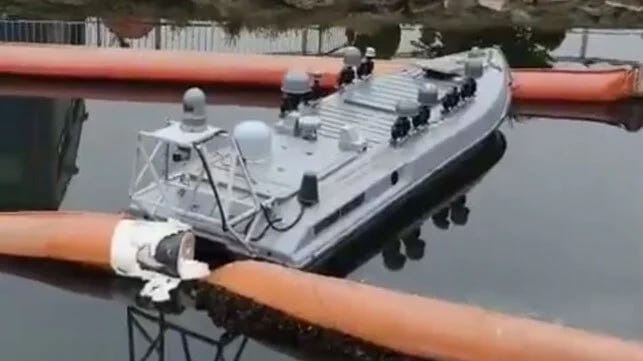
From a military perspective, such an explanation is plausible. Modern unmanned systems depend heavily on communications links, satellite navigation, and electronic systems that can be disrupted by hostile countermeasures. Electronic warfare has become a defining feature of the conflict, and both sides have repeatedly claimed success in interfering with the opponent’s drones and guided weapons.
At the same time, the timing of the explanation has prompted skepticism among some observers. Critics argue that the jamming narrative may serve not only as a technical explanation but also as a form of political damage control. If a drone entered the territorial waters of a NATO member and approached critical civilian infrastructure, questions regarding responsibility, mission planning, and operational oversight would inevitably follow. In such circumstances, attributing the incident to electronic interference may help reduce political fallout and limit diplomatic consequences.
The strategic significance of Constanța further amplifies these concerns. As Romania’s largest port and one of the most important logistics hubs in the Black Sea region, Constanța plays a critical role in commercial trade, energy shipments, military logistics, and the movement of Ukrainian exports. Any incident involving an armed unmanned vessel in the vicinity of the port carries implications that extend well beyond the immediate event itself.
One aspect that deserves particular attention is the potential for unintended escalation. Even if the drone was not directed against Romanian infrastructure, the presence of an explosive-laden vessel near a major commercial port creates the risk of secondary effects that could far exceed the damage caused by the drone’s warhead alone.
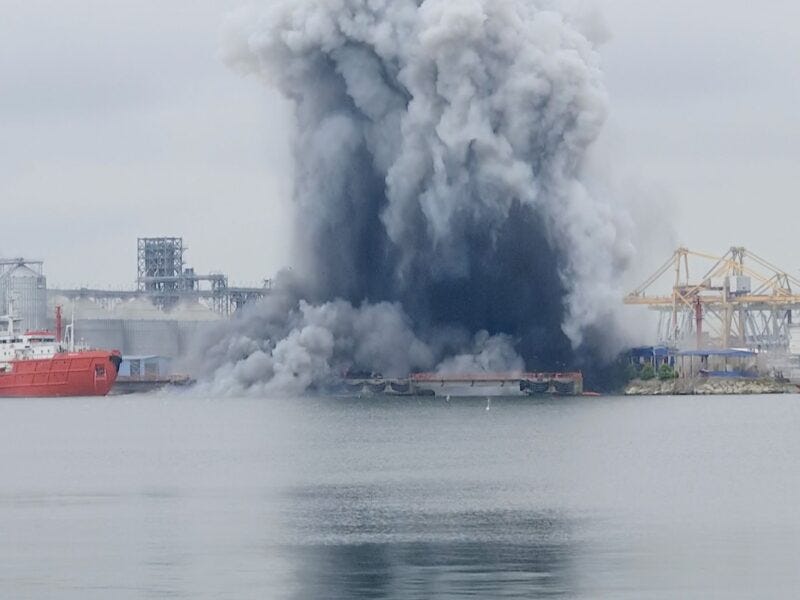
A frequently discussed theoretical scenario involves the proximity of industrial facilities storing hazardous materials. Ports commonly handle large quantities of fuel, chemicals, fertilizers, and other industrial products. If an explosion were to occur near a warehouse containing substantial quantities of ammonium nitrate, the consequences could be dramatically amplified. Historical incidents have demonstrated that under certain conditions, ammonium nitrate can contribute to catastrophic secondary explosions, producing blast effects many times greater than the initiating event.
This does not mean that such an outcome was likely in the Constanța case, nor does it imply that any specific facility was in immediate danger. However, the scenario illustrates the broader risks associated with armed drones operating near densely developed port infrastructure. In such environments, the greatest danger may not come from the drone itself but from the chain reaction that could result if critical facilities or hazardous materials are involved.
The incident, therefore, raises broader questions regarding the growing use of long-range naval drones outside traditional combat zones. As these systems become more capable and operate over greater distances, the possibility of navigation failures, communication losses, targeting errors, or unintended escalation becomes increasingly important. Whether the reported drone reached the area due to jamming, operator error, mission failure, or some other cause remains a matter for investigation.
What is clear is that the event highlights the potential vulnerability of major ports and coastal infrastructure to unmanned maritime systems. It also demonstrates how quickly a relatively small weapon can become a strategic issue when it appears near critical infrastructure belonging to a NATO member state. Until a complete technical and forensic investigation is conducted, competing explanations will continue to circulate. The claim of electronic jamming may ultimately prove correct, but it will likely remain the subject of debate among analysts who view it either as a legitimate explanation or as an attempt to mitigate the political consequences of an embarrassing and potentially dangerous incident.
Conclusion
Ukraine’s naval drone program has emerged as one of the most innovative developments of the current conflict. Systems such as the MAGURA V5 and Sea Baby have demonstrated the ability to operate over long distances, strike maritime targets, and challenge a conventionally superior naval force. Their success has attracted the attention of military planners worldwide and highlighted the growing importance of unmanned maritime warfare.
A key factor behind these capabilities is the integration of modern communications, satellite navigation, real-time surveillance, and intelligence support. While Ukraine develops and operates these systems, it also benefits from extensive military, technological, and intelligence assistance from Western partners. Access to satellite imagery, maritime surveillance data, communications networks, and other forms of support provides a level of situational awareness that would otherwise be almost impossible to achieve. More and more, it is a war between NATO and Russia, where Ukraine is just the one to execute the dirty work and take casualties for the prosperity of the so-called Western partners.
As the operational range of naval drones increases, so does the possibility of “intentional” incidents occurring far from traditional combat zones. Drones operating across the Black Sea and potentially into other parts of the Mediterranean raise concerns about navigation failures, misidentification of targets, and unintended encounters with civilian or third-country infrastructure. Such incidents could rapidly develop into broader political or military crises.
Some analysts have argued that attacks involving long-range naval drones carry an inherent risk of escalation. In their view, operations conducted near the territory, ports, or shipping routes of NATO member states could create situations in which responsibility becomes disputed, and political tensions rise sharply. Supporters of this argument suggest that even a limited incident could generate pressure for a stronger international response and increase the risk of direct confrontation between Russia and Western countries.
Others reject this interpretation, arguing that Ukraine’s primary objective remains the disruption of Russian military and logistical activities rather than the deliberate creation of a wider conflict. They note that any action resulting in direct confrontation between Russia and NATO would carry enormous risks for all parties involved and would therefore be contrary to the interests of both Ukraine and its Western supporters.
Regardless of intent, the combination of increasingly capable naval drones and extensive intelligence support has created a new strategic reality. Operations that were once impossible are now technically feasible, while the distinction between local military actions and events with broader geopolitical consequences is increasingly blurred. As unmanned maritime systems continue to evolve, managing the risks of escalation may become as important as the tactical advantages these weapons provide.
Last but not least, what goes around comes around
The rapid evolution of naval drone warfare in the Black Sea has demonstrated that sophisticated maritime attacks are no longer the exclusive domain of major military powers. One of the most significant lessons emerging from recent conflicts is that relatively inexpensive unmanned surface vessels (USVs) can pose a serious threat to some of the world’s most advanced naval forces.
The technologies required to construct a basic naval drone are no longer difficult to obtain. Commercial satellite navigation systems, marine engines, communications equipment, cameras, autopilots, and explosive payloads are widely available on the civilian market. A determined non-state actor, criminal organization, terrorist group, or rogue network with modest technical expertise could potentially assemble an effective naval attack platform at a fraction of the cost of a conventional missile or torpedo.
The greatest concern is not the destruction of large naval bases but the ability to target high-value assets at vulnerable moments. Submarines, for example, are among the most expensive and strategically important assets in any navy. Yet they are particularly vulnerable while entering or leaving port, navigating restricted channels, or operating near harbor entrances. During these phases, their maneuverability is limited, their routes are often predictable, and they may be operating on the surface or at shallow depth.
A naval drone does not necessarily need to sink a submarine to achieve strategic success. Even a relatively small explosive charge detonated against the hull could cause significant structural damage, flooding, or damage to critical sensors, propulsion systems, or external equipment. Modern submarines require extensive inspection and repair following any suspected hull damage. A successful strike could potentially remove a vessel from operational service for months or even years while repairs and safety certifications are completed.
This vulnerability extends beyond submarines. Aircraft carriers, amphibious assault ships, guided missile destroyers, logistics vessels, and fuel ships could all become attractive targets. The financial asymmetry is striking. A drone costing tens of thousands of dollars could potentially disable an asset worth hundreds of millions or even billions.
The United States is not immune to this threat. Naval facilities on both the Atlantic and Pacific coasts contain concentrated collections of high-value vessels operating in relatively constrained maritime environments. Bases such as those supporting submarine operations present obvious targets for actors seeking maximum strategic effect from minimal investment.
The same concerns apply to the United Kingdom. British nuclear submarines operating from Faslane must transit predictable waterways before reaching open ocean. Similarly, France’s strategic submarine force relies on a limited number of facilities and transit routes. In both cases, hostile actors could theoretically exploit geographical constraints to increase the probability of a successful attack.
Other NATO navies may be even more vulnerable. Many operate from ports near civilian shipping lanes, commercial infrastructure, and densely populated coastal regions. The challenge of distinguishing a hostile drone from ordinary maritime traffic becomes increasingly difficult as autonomous systems become smaller, cheaper, and more numerous.
Another factor contributing to the threat is the growing availability of artificial intelligence, autonomous navigation, and commercial communications technologies. Systems that once required the resources of a nation-state can now be assembled using commercially available components. As demonstrated in recent conflicts, maritime drones can operate over long distances, coordinate with other unmanned systems, and exploit gaps in traditional naval defenses.
The implications for naval security are profound. For decades, naval planners focused primarily on threats from submarines, anti-ship missiles, aircraft, and mines. The emergence of low-cost unmanned maritime systems introduces a new category of threat that is difficult to detect, inexpensive to deploy, and capable of producing disproportionate strategic effects.
The challenge facing Western navies is therefore not merely technological but conceptual. Defending against a handful of sophisticated adversaries is one thing; protecting critical naval infrastructure against potentially numerous low-cost systems operated by non-state actors is another. As the barriers to entry continue to fall, the threat posed by improvised or commercially derived naval drones is likely to become a permanent feature of the maritime security environment.
Recent events have shown that naval drones are no longer experimental weapons. They are becoming a practical tool capable of threatening some of the world’s most valuable military assets. The question is no longer whether such systems can be used against major naval powers, but whether existing defenses are sufficient to stop them before a serious attack occurs.
[i] Edited by Piquet (EditPiquet@gmail.com)
Defense Nuclear Agency. Overview of the Wave Generation Process and the Wave Field.
Méhauté, B., & Wang, S. (1996). Water Waves Generated by Underwater Explosion. Advanced Series on Ocean Engineering, Vol. 10. World Scientific Publishing.
U.S. Army Engineer Waterways Experiment Station (WES) reports from the 1950s
Bernard Le Méhauté and Shen Wang, Water Waves Generated by Underwater Explosion (1996)
Water Waves Generated by Underwater Explosions, Defense Nuclear Agency Alexandria, VA 22310-3398
If you like the article (and many more articles regarding military subjects will come), you can buy me a coffee:
https://www.buymeacoffee.com/mmihajloviW
"Ukraine" isn't doing any of this, whatever feel-good stories are told for public consumption...Alll this, design, manufacturing, most storage, is done by NATO.
A little bit dry reading but the implications noted are pretty dire. I take as an example the 2 British AirCraft Carriers on which, at least $8 Billion now seems to have been spent. These large vessels have so far be a disaster with one carrier under total refit. Between a hypersonic missile swarm threat and multiple sea borne drones, it is clear that in a true war situation these carriers could be easily destroyed. Feels like we are still fighting WW2.
I remain flabbergasted at the change in warfare since the start of the Russian SMO. I don't believe 1 in a 100 understand the implications and consequences of the last 4 years and how history will record this time as a pivotal point in military and geopolitical history.