
Venezuela Raid - Aftermath [i]
Why Venezuela’s Air Defense Failed

Introduction
In early January 2026, a rapid and highly coordinated U.S. military operation unfolded inside Venezuelan airspace, ending with the capture of President Nicolás Maduro in Caracas. The action was carried out over a very short time window and reportedly involved a large and diverse force that included stealth aircraft, bombers, electronic warfare platforms, surveillance and reconnaissance assets, combat helicopters, and unmanned systems. Despite Venezuela possessing what is often described as a layered air-defense network, ranging from long- and medium-range missile systems to short-range launchers, man-portable air-defense weapons, anti-aircraft guns, and radar installations, there was no visible or effective attempt to contest the operation or shield the capital and the president from the incursion.
The absence of meaningful resistance immediately triggered intense debate in international media and analytical circles. Some commentary quickly fell into familiar patterns, portraying the event as proof of the inherent inferiority of Soviet- and Russian-designed air-defense systems and reinforcing a narrative of overwhelming Western technological dominance. At the other end of the spectrum were more measured assessments, which emphasized that air-defense performance depends not only on hardware but on readiness, doctrine, training, integration, and the specific conditions under which systems are employed.
It is also essential to view these events through a broader geopolitical lens. The Caribbean has long been regarded by Washington as its immediate strategic neighborhood and de facto sphere of influence. Historically and practically, the United States has shown little tolerance for losing control in this region, regardless of justification. Whether framed as counter-narcotics operations, protection of natural resources, regional stability, or other pretexts, the underlying objective remains the same: maintaining dominance in what is seen as America’s front yard.
Western mass media coverage of Russian-designed air-defense systems often displays a striking double standard that borders on outright charlatanism, particularly when the same systems are evaluated differently depending on who operates them. When these systems are used by U.S. allies, most notably Ukraine, they are frequently described as “effective,” “resilient,” or “cleverly employed.” When operated by U.S. opponents or politically unfriendly states, the very same systems are routinely portrayed as obsolete, unreliable, or fundamentally flawed. This contradiction is not rooted in technical reality but in narrative framing, selective reporting, and political alignment.
Paper vs Reality
To understand why Venezuela’s air defenses failed to play a decisive role, it is first necessary to distinguish between what the country possessed on paper and what it could realistically bring to bear in combat at the moment of crisis. Venezuela fields one of the most capable air-defense inventories in South America. In practical terms, however, the number of these systems relative to the country’s size provides insufficient density for comprehensive territorial air defense. Venezuela covers approximately 916,000 square kilometers, while the effective engagement footprint of even long-range surface-to-air missile systems is limited and fragmented by terrain, radar horizon, and the need for mutual overlap. When assessed by realistic detection ranges, radar coverage gaps, and engagement envelopes, Venezuela’s air-defense assets can protect only a small number of high-value targets such as major air bases, critical infrastructure nodes, and selected political and command centers, rather than providing continuous, layered coverage of national airspace. This structural limitation sharply constrains defensive flexibility and effectively dictates a point-defense posture, a reality that U.S. operational planners would well understand and deliberately exploit.
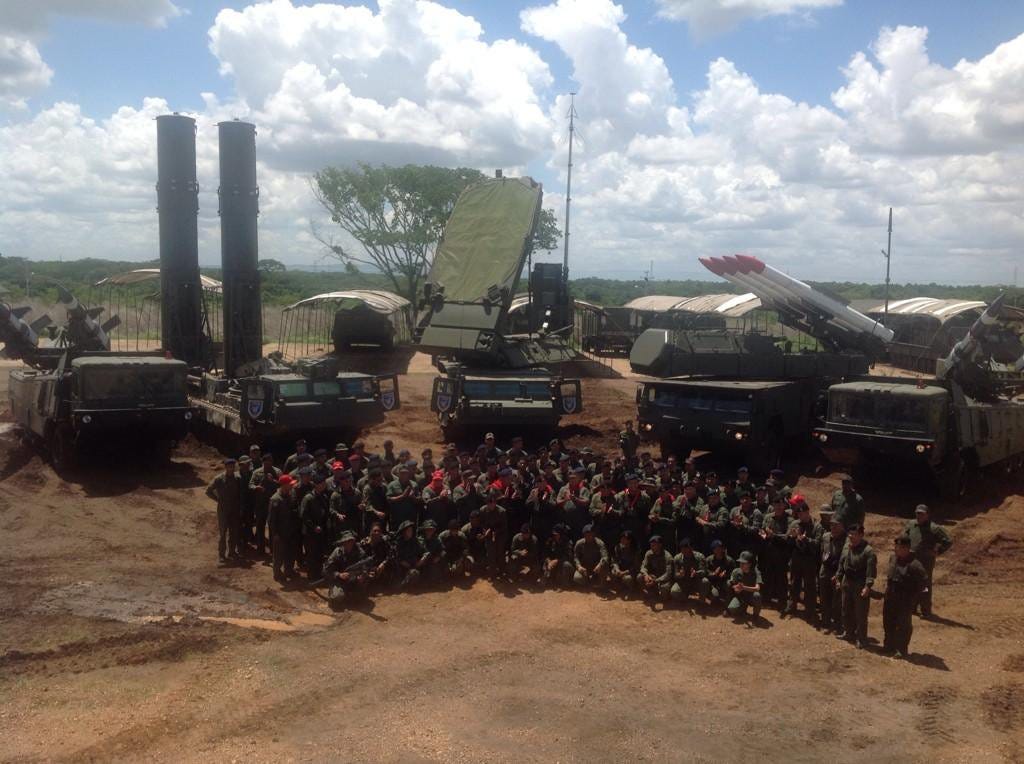
Let’s compare the air-defense capabilities of Ukraine and Venezuela in context. Venezuela’s land area is roughly 1.5 times that of Ukraine’s, posing a significant challenge for any integrated air-defense network built on a limited stock of systems. Ukraine in February 2022 possessed a much larger and more densely distributed air-defense inventory, including several hundred medium- and long-range surface-to-air missile launchers drawn from its Soviet-era stock and supplemented over time by Western systems and munitions. This created a multi‑tiered architecture with overlapping engagement zones and a widely dispersed radar footprint, supported by layered early‑warning coverage and integrated command and control, continually refined with the help of NATO and Western intelligence and material support. By contrast, Venezuela’s inventory, while including capable elements such as long‑range S‑300VM and medium-range Buk systems, as well as short‑range units and man‑portable air-defense missiles, is far smaller in absolute numbers and therefore effective primarily in localized sectors rather than across the country’s entire airspace. Ukraine’s defense posture also benefits from an extensive network of specialized facilities for maintenance, overhaul, logistics integration, and crew training, as well as an industrial base capable of producing or repairing components and keeping systems operational under sustained use. Venezuela, in contrast, reportedly maintains only a few centers with comparable capabilities, severely limiting its ability to sustain high readiness, modernize systems, or conduct large‑scale training across its entire air‑defense park. Put simply, these are two very different strategic and military situations, and comparing a successful U.S. operation against Venezuela with an “unsuccessful” Russian air campaign against Ukraine without accounting for scale, density, sustainment infrastructure, and allied integration is not feasible in operational terms.
Over the past two decades, Venezuela invested in air defense equipment, primarily sourced from Russia, with additional contributions from China and Iran. Its inventory has included long-range surface-to-air missile systems intended to deter high-altitude incursions, medium-range systems designed to engage aircraft and missiles at intermediate distances, and short-range systems meant to protect key sites against low-flying threats. In addition, Venezuela has fielded a large number of anti-aircraft guns and shoulder-fired missiles, often showcased during military parades and exercises as symbols of national sovereignty and deterrence.
An earlier article by the author addressed the potential for a U.S. attack and can be accessed here:
This article analyzes Venezuela’s air-defense assets and evaluates several potential scenarios; it is therefore recommended reading in conjunction with this article.
The Air Defense Complexity
Viewed in isolation, a theoretically layered defense structure capable of detecting and engaging aerial threats across different ranges and altitudes. Long-range systems are meant to keep hostile aircraft at a distance, medium-range systems to disrupt penetration attempts, and short-range assets to provide point defense around critical facilities and leadership targets. However, a defense network that appears comprehensive on paper does not automatically translate into an effective combat system.
In practice, the Venezuelan air defense apparatus appears to suffer from significant structural weaknesses. Key elements of the detection and command network were reportedly degraded well before the operation began. Radar coverage was uneven and, in some areas, unreliable, undermining the ability to maintain a continuous and accurate picture of the airspace. Without dependable early warning and centralized coordination, missile batteries and gun units operate in isolation, reacting late, or not at all, to fast-moving events. In such conditions, even advanced weapons can be rendered ineffective simply because they are not cued in time or lack clear engagement authority.
Training and readiness further compounded these problems. Modern surface-to-air missile systems are complex and demanding, requiring frequent exercises, disciplined crews, and well-rehearsed procedures to function effectively under stress. Engaging multiple threats approaching from different directions, at different altitudes, and at different speeds—especially in the presence of electronic interference—is one of the most challenging tasks in modern warfare. There is little evidence that Venezuelan air-defense units had recently trained at a realistic tempo for such scenarios, raising serious doubts about their ability to respond decisively to a sudden, coordinated attack.
The U.S. operation's design also played a decisive role. Rather than testing Venezuela’s defenses head-on, the operation appears to have focused on neutralizing them at the outset. Electronic warfare assets were used to disrupt radar emissions, communications, and command links, depriving defenders of situational awareness. In parallel, precision strikes targeted key nodes of the air-defense network, including radars, command centers, and air bases. This approach effectively severed the connections between sensors, decision-makers, and shooters, leaving individual units unable to act in a coordinated manner.
Stealth aircraft further complicated the defender’s task. While stealth does not make an aircraft invisible, it significantly reduces detection range and tracking accuracy, particularly for older radar systems not designed to counter such threats. When combined with electronic attack and rapid maneuver, this sharply lowers the probability that defenders can generate a timely and reliable firing solution.
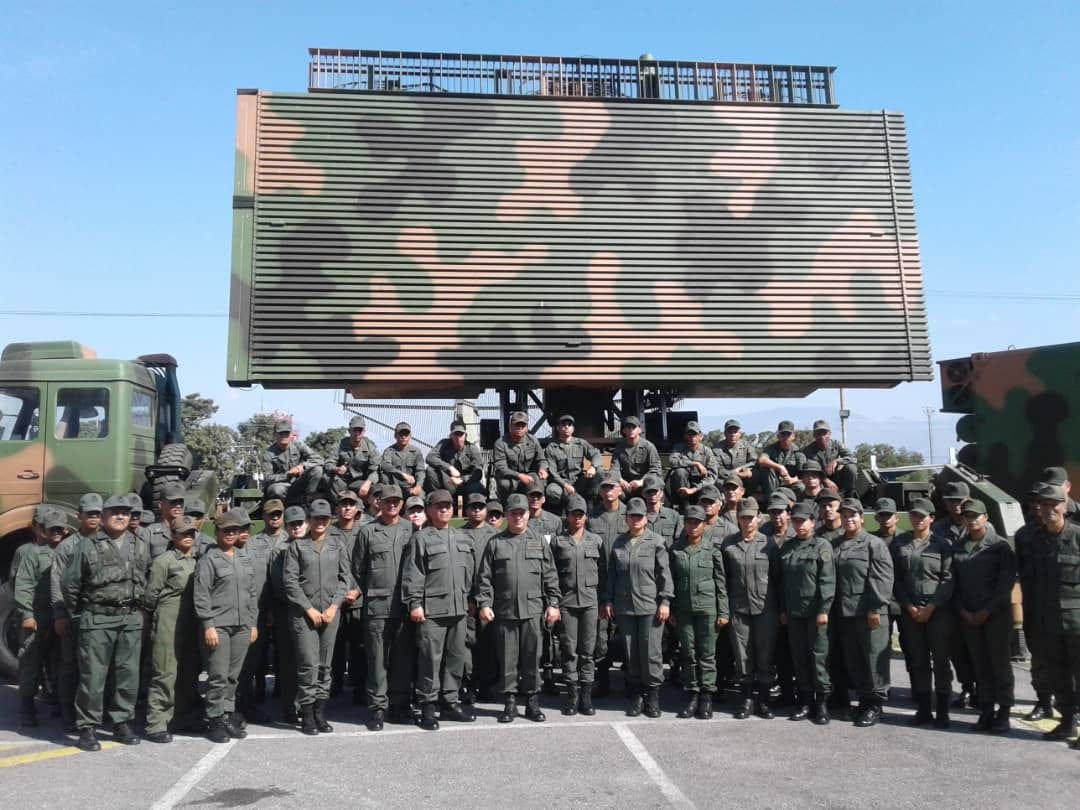
Even where local units may have attempted to respond, they faced technical limitations inherent to their systems. Short-range missiles and anti-aircraft guns can be effective against certain targets, but their performance depends heavily on accurate cueing and favorable engagement geometry. Against fast jets, helicopters using terrain masking, or aircraft equipped with modern countermeasures, their effectiveness drops sharply without radar guidance and coordinated control.
Beyond technical factors, doctrine and organizational culture also shaped the outcome. Venezuela’s air-defense posture appears to have emphasized deterrence through visible ownership of advanced systems rather than sustained operational readiness. Public messaging often highlighted the number of weapons in service, but numbers alone do not create an integrated defense capable of withstanding a high-intensity, multi-domain operation. Such an approach may discourage minor incursions or unauthorized flights, but it offers limited protection against a determined and well-prepared adversary.
Political dynamics within the military further complicate the picture. Centralized control, politicized command structures, and uneven morale can all inhibit rapid decision-making in a crisis. When loyalty is prioritized over professional competence, units may hesitate, misinterpret orders, or focus on self-preservation rather than taking decisive action, especially in fast-moving, uncertain situations.
Ultimately, the events in Venezuela illustrate a broader truth about air defense: it is not a collection of isolated weapons, but a complex system that depends on detection, communication, training, logistics, and doctrine working together seamlessly. Weakness in any one of these areas can undermine the entire structure. In this case, multiple shortcomings appear to have converged, leaving a defense network that looked formidable in theory but proved ineffective in practice.
Seen from this perspective, the lack of visible resistance was not simply a demonstration of technological superiority or a condemnation of any particular weapons family. It was the result of a complex interaction between equipment, readiness, organization, and the manner in which the operation was executed. Advanced systems, regardless of origin, require sustained investment, integration, and skilled personnel to perform as intended. When those conditions are absent, even impressive arsenals can fail at the moment they are most needed.
The Air Defense “Trinity”
Where, then, does air defense fit into this environment of pressure and instability? The answer is that it does exist and it is present, but it is subject to the same stresses affecting the broader state and society. To understand its performance, the reader must recognize that air defense rests on a fundamental trinity: equipment, tactics, and people. If any one of these elements fails, the entire system fails with it. Effective air defense has little to do with the country of manufacture stamped on the hardware. While equipment quality certainly matters, functionality matters far more.
Complex air-defense systems require constant maintenance, periodic overhauls, and a steady flow of spare parts to remain operational. A country under long-term sanctions and severe economic constraints simply cannot sustain this level of investment. As sanctions persist, more systems inevitably fall out of service, with uncertain timelines for repair or return to operational status. This reality applies universally: even the most advanced equipment in the world will fail if it is not properly maintained, regardless of who produced it.
The second pillar of the trinity is tactics. On paper, Venezuelan air-defense doctrine follows Soviet and Russian principles, which are neither outdated nor inherently flawed. The problem lies not in doctrine itself, but in its execution. Effective tactics demand continuous training, frequent exercises, and repeated rehearsal of combat scenarios, including live or simulated engagements. Crews must internalize procedures through repetition until responses become automatic under stress. However, this level of training is impossible if the equipment used for exercises is unavailable, unreliable, or nonfunctional, once again circling back to the issue of maintenance and readiness.
The final and most critical element is personnel. Air-defense systems do not operate themselves. Without well-trained, motivated, and confident crews, even the most sophisticated weapons are rendered inert. In the Venezuelan case, this human factor was likely the most vulnerable link in the chain and almost certainly one of the primary considerations for U.S. planners. Political pressures, morale issues, uneven training standards, and questions of loyalty all undermine combat effectiveness. When people are uncertain, undertrained, or disengaged, no amount of hardware can compensate.
Viewed through this lens, the shortcomings of Venezuelan air defense cannot be explained solely by technology. They are the result of sustained pressure across all three pillars of the air-defense trinity. Equipment degradation, inadequate training, and human factors combined to create a system that existed in form, but not in function, precisely the type of vulnerability a well-prepared adversary is designed to exploit.
“Money can open doors no drill bit ever could” - the personnel
To further develop the air-defense trinity, the third element - the people, which must be examined through the broader condition of Venezuelan society. Venezuela is experiencing a deep and prolonged national crisis. Inflation remains extreme, access to basic goods is inconsistent, and essential services are unreliable. These conditions do not affect only the civilian population; they also directly and severely impact ordinary military personnel. Air-defense crews are no exception.
Beyond the external threat of military aggression, the personnel tasked with operating air-defense systems face daily challenges of basic survival. This reality applies not to senior generals, who often enjoy insulation from hardship through privilege and political connections, but to junior officers, non-commissioned officers, and enlisted personnel. These are the individuals who operate radars, maintain launchers, crew command posts, and man firing positions. Prolonged economic hardship inevitably erodes morale, discipline, and readiness, particularly when the contrast between the living conditions of rank-and-file servicemen and the political-military elite becomes increasingly visible.

A divided society produces divided loyalties. Lower-ranking personnel, struggling to support families and meet basic needs, may reasonably question whether personal sacrifice is justified when the state itself appears unable—or unwilling—to provide for them. While a sense of duty and patriotism does exist and should not be dismissed, these factors alone cannot fully offset sustained material deprivation. This human dimension is not incidental; it is precisely the type of vulnerability that serious adversaries analyze and seek to exploit.
This is where intelligence operations intersect decisively with military planning. Identifying key personnel within combat units, whether commanders, technicians, operators, or support staff, and assessing their vulnerabilities is a standard component of modern warfare. From an intelligence perspective, every individual matters. A commanding officer can influence outcomes through orders, but a technician can disable a system just as effectively by failing to maintain it, misconfiguring it, or ensuring it is unavailable at a critical moment.
Senior officers are particularly valuable targets. Gaining leverage over a unit commander can result in stand-down orders at the decisive moment, eliminating resistance without firing a shot. To reinforce such outcomes and reduce uncertainty, lower-ranking personnel may be independently approached to ensure redundancy: systems can be rendered inoperable for several crucial hours through deliberate inaction, technical “failures,” or procedural delays. Air-defense systems are complex by nature, and they require no extraordinary effort for a small number of insiders to disrupt their functionality at precisely the wrong time.
Such actions do not require a broad conspiracy. Recruiting several individuals across different units, each acting independently and unaware of the full plan, is sufficient to degrade the system during the narrow window required for an operation. This window needs only to be long enough to allow airspace penetration, helicopter landings, and the extraction of a high-value target.
In the Venezuelan case, it is a reasonable assessment that major air-defense assets were neutralized from within the system itself, either through deliberate sabotage, passive non-compliance, technical neglect, or direct orders to stand down. As a contingency, the United States deployed stealth aircraft and electronic warfare platforms to suppress or destroy remaining threats if resistance emerged. However, the apparent lack of engagement suggests that these kinetic and electronic measures served primarily as insurance rather than the primary means of suppression.
In effect, financial leverage and intelligence preparation may have proven more effective than electronic jamming or precision strikes. A dollar is more powerful than the specialized EW pod. The operation demonstrated a high level of integration between the US intelligence and military planning, combining internal destabilization with overwhelming external capability to create favorable conditions for success.
Conclusion
Venezuelan air defense did not fail solely because of the overwhelming power of U.S. military assets; it failed because key elements of its network were compromised, fragmented, and rendered largely nonfunctional during the critical hours of the operation - a breakdown that very likely reflected deeper issues within the top echelons of command and the wider defense structure.
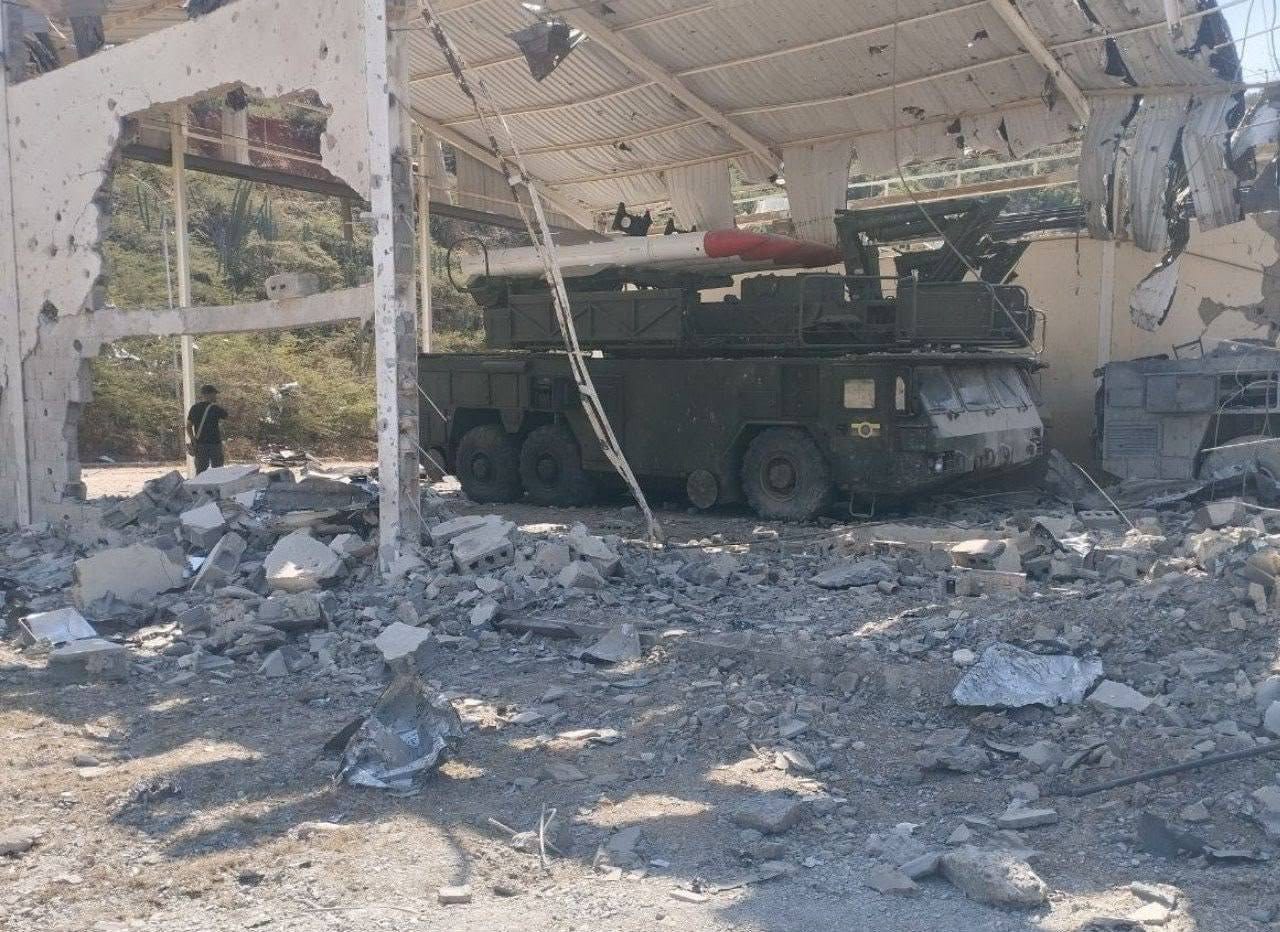
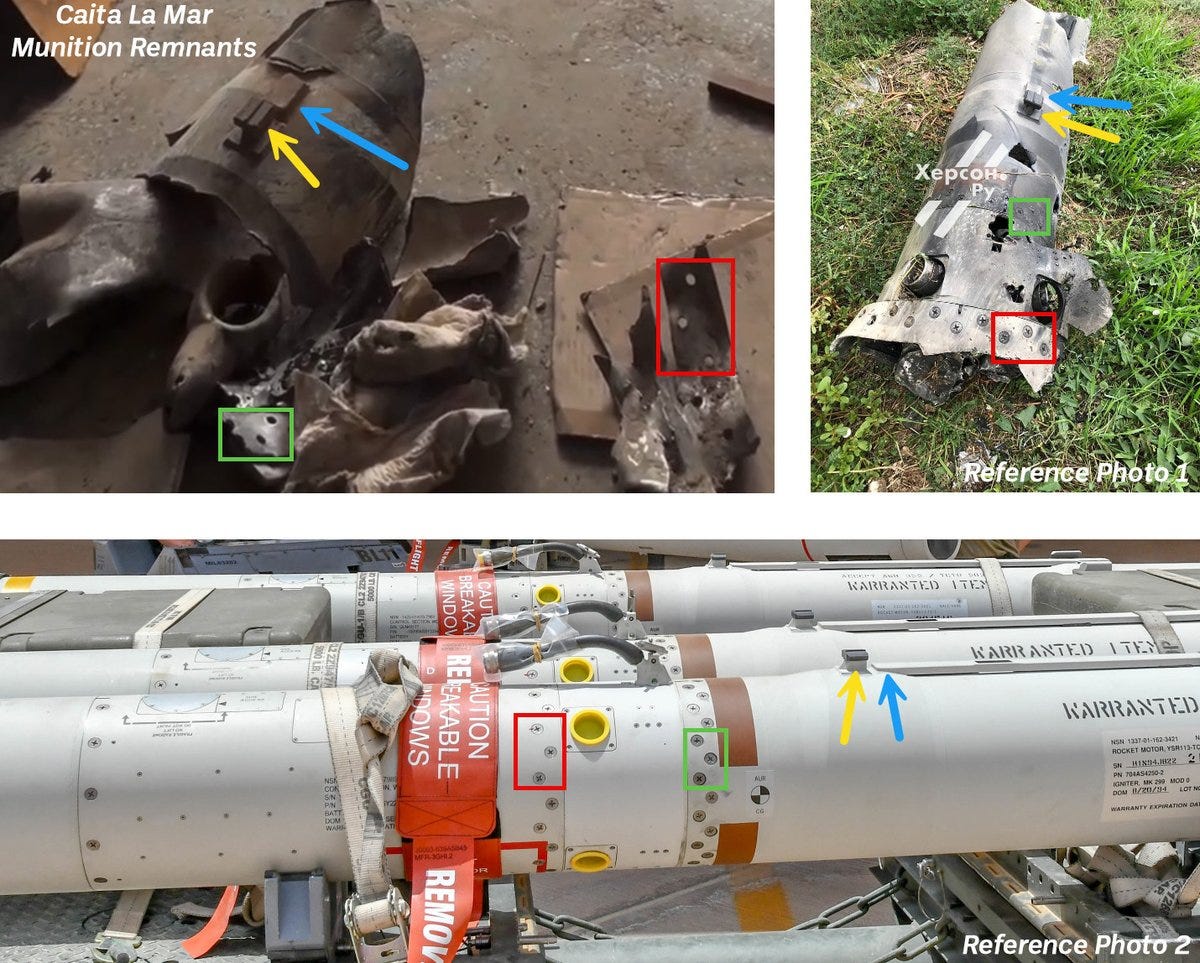
Just to be thorough, ensure sufficient security, and avoid repeating past mistakes, the U.S. also targeted several military bases and key power distribution sites.
This outcome highlights a central lesson of modern air defense: systems do not collapse only under physical attack; they can be neutralized through human, organizational, and systemic factors just as effectively, and in many cases more so. In this operation, the decisive battlefield was not just the airspace over Caracas, but the social, economic, and operational terrain within the defending force itself. The limited and disjointed response of Venezuela’s air‑defense network - despite the presence of multiple long‑range and medium‑range systems - suggests that degraded readiness, fragmented integration, insufficient training, and possible command hesitancy or constraints played a critical role in preventing an effective reaction. At the outset of the assault, U.S. forces employed extensive electronic warfare and suppression measures that disrupted radar and command links, further disorienting defenders and limiting their ability to detect, track, and engage incoming aircraft. The absence of coordinated resistance during those decisive hours reflected deeper weaknesses in cohesion, morale, and operational command that undermined the air‑defense network's ability to operate as a unified, resilient system.
[i] Edited by Piquet (EditPiquet@gmail.com)
If you like the article (and many more articles regarding military subjects will come), you can buy me a coffee:
https://www.buymeacoffee.com/mmihajloviW
Yet after such a resounding and apparently one-sided victory, the USA is apparently no further forward. They have kidnapped two people and plan to try them on ill-defined charges under US law - which has no jurisdiction over Venezuelan citizens, let alone over the head of state and his wife. If Mr Maduro is acquitted, will Washington apologise and send him home? But how can he be found guilty without exposing the US justice system as an abject servant of the executive?
It is an axiom of military science that ground cannot be taken and held except by infantry on the ground. Yet to land American soldiers in Venezuela would be to place a boot in an alligator's mouth. (Or maybe a cayman's). As soon as they are on the ground, some will be killed. The Americans will retaliate and send more soldiers. More will be killed...
Insightful article, Mike. Thank you, as always.
Imagine if Lt. Colonel Zoltán Dani was in charge of the Venezuelan air defense....